From November 28 to 30, 2025, The International Symposium on Multimodal Transportation (ISMT 2025) was successfully held at the National University of Singapore Guangzhou Research Translation and Innovation Institute (NUS GRTII). The symposium was hosted by NUS GRTII and co-organized by the School of Automotive and Transportation Engineering at Hefei University of Technology. Centered on the theme “Research Translation and Innovation in Multimodal Transportation,” the event brought together over 130 renowned scholars, industry leaders, and young researchers from more than 40 universities and institutions worldwide, including the National University of Singapore (NUS), Tsinghua University, The University of Hong Kong, Fudan University, Tongji University, Sun Yat-sen University, and The Hong Kong University of Science and Technology. Participants engaged in dynamic discussions on cutting-edge trends, technological breakthroughs, and future pathways in multimodal transportation.
Opening Session: Setting the Stage for a New Chapter
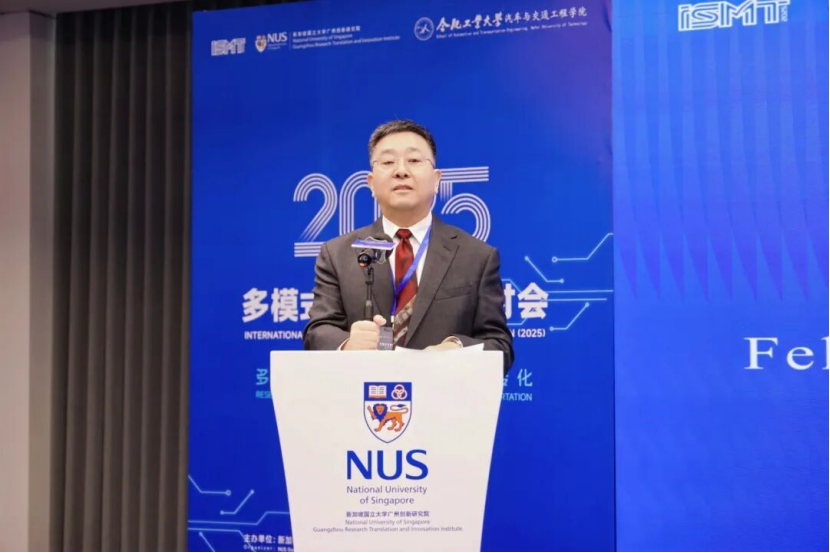
The symposium commenced with an opening address by Professor Meng Qiang, ISMT 2025 Chair, Professor in the Department of Civil and Environmental Engineering at NUS, and Member of the Academy of Engineering, Singapore. Professor Meng warmly welcomed the distinguished keynote speakers, representatives from the host organizations, and all attendees. He reflected on the development of ISMT since its inception in 2017 and shared exciting news, including that the journal Multimodal Transportation, co-founded by ISMT, has been selected for the “High-Starting Point New Journal” project under China’s Excellence Action Plan for STM Journals and will be indexed in ESCI starting January 2026. Professor Meng expressed his hope that participants would fully utilize this platform for in-depth exchange and collaboration to explore innovative paths for the future of transportation, and he extended sincere gratitude to the host, co-organizer, and all attendees for their support.
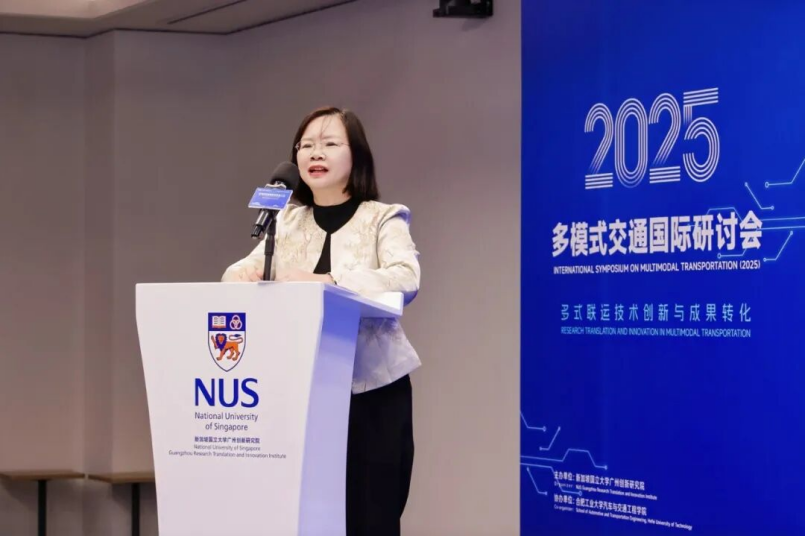
Following this, Ms. Fu Xiaofang, Senior Associate Director of NUS GRTII, representing the host institution, delivered a speech. She stated that the theme of “Research Translation and Innovation” strongly aligns with NUS GRTII’s mission of “bridging research and industry, facilitating China-Singapore collaboration.” She expressed her anticipation for experts to jointly foster an industry-academia-research synergy ecosystem to translate frontier research into innovative solutions for real-world transportation challenges.
Keynote Speeches:
Gathering of Luminaries, Highlights of Insights
The keynote session featured an illustrious lineup, with five top-tier experts sharing their latest research findings and industry insights.
Professor Hai Yang, Chair Professor in the Department of Civil and Environmental Engineering at The Hong Kong University of Science and Technology, delivered a speech titled “The Future of the Low-Altitude Economy: Opportunities, Challenges, and Policy Perspectives.” He provided an in-depth analysis of the transformative impact of technologies like drones and flying cars on urban mobility and logistics systems, showcased his team’s drone application solutions in areas like urban inspection and environmental monitoring, and proposed policy suggestions for building a low-altitude transportation network in the Guangdong-Hong Kong-Macao Greater Bay Area.
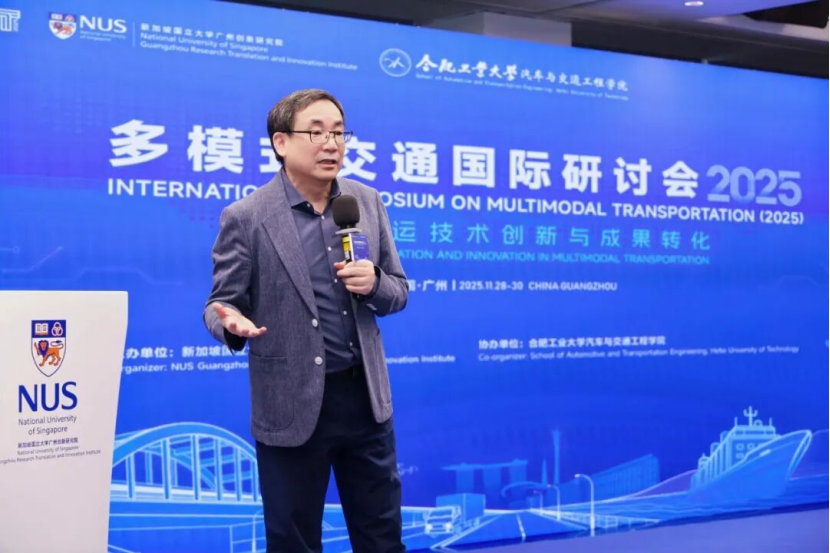
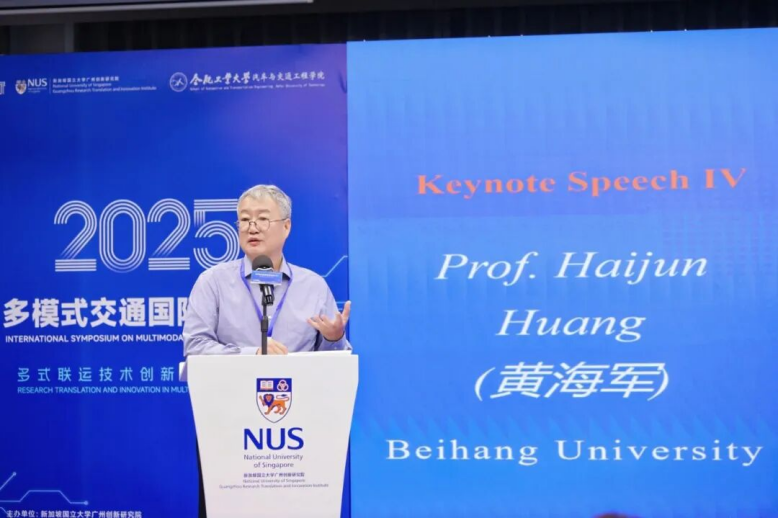
Professor Huang Haijun from the School of Economics and Management at Beihang University (former Standing Committee Member of the Beihang University Party Committee and Vice President) focused on the ride-hailing market. Through microeconomic modeling, he compared and analyzed the effects of commission-based versus membership-based labor contract models on gig workers’ welfare, offering novel insights for balancing industry efficiency and fairness.
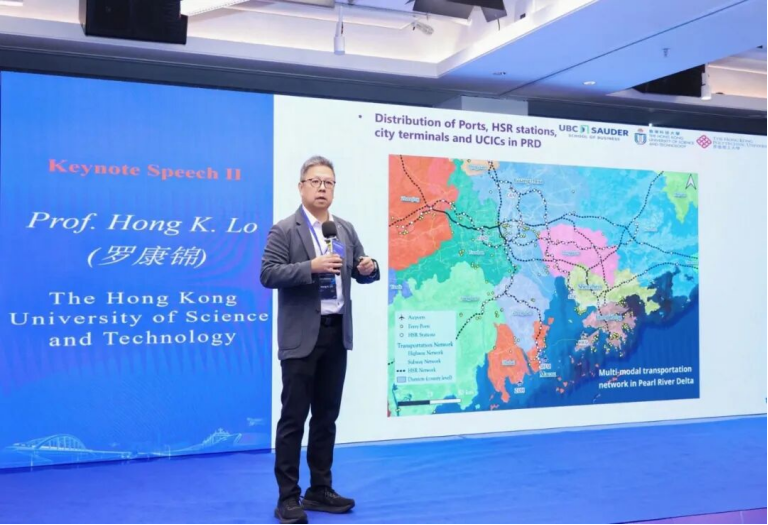
Professor Hong K. Lo, Dean of Engineering and Chair Professor of Civil and Environmental Engineering at The Hong Kong University of Science and Technology, addressed “Competitive Airport Operations in Multi-Airport Regions.” He emphasized the role of city terminals in enhancing passenger convenience and alleviating airport congestion, providing practical references for infrastructure planning in multi-airport regions.
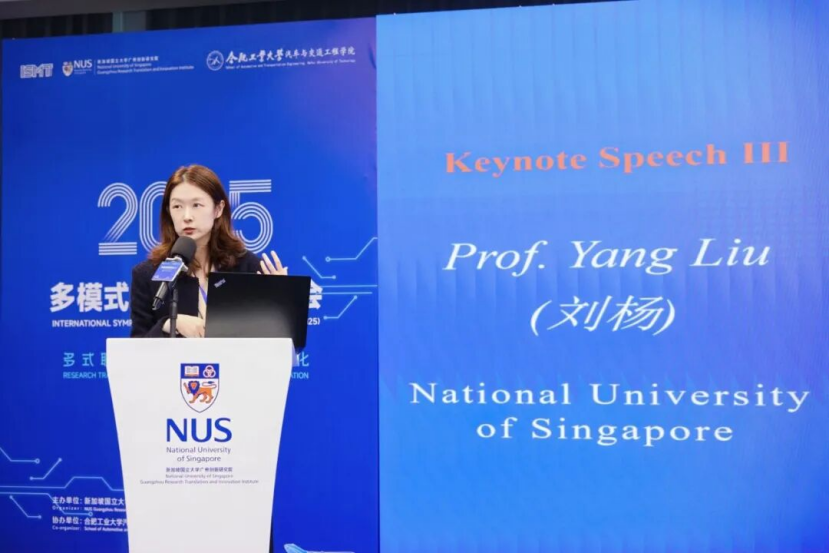
Associate Professor Liu Yang, a principal investigator at NUS GRTII and a jointly appointed Associate Professor in the Department of Civil and Environmental Engineering and the Department of Industrial Systems Engineering and Management at NUS, spoke on “Mobility-on-Demand Management for an Aging Society.” She shared her team’s stochastic dynamic programming model, offering a technical pathway for building a fair and inclusive mobility system for aging societies.
Professor S.C. Wong, Associate Dean of the Faculty of Engineering and Chair Professor in the Department of Civil Engineering at The University of Hong Kong, presented on “The ME-PCM Method for Stochastic Modeling of Pedestrian Dynamics.” This method can accurately quantify the statistical distribution of pedestrian density, helping to identify areas with “moderate average density but high risk of extreme congestion,” thus providing a quantitative tool for the safety design and operational management of pedestrian facilities.
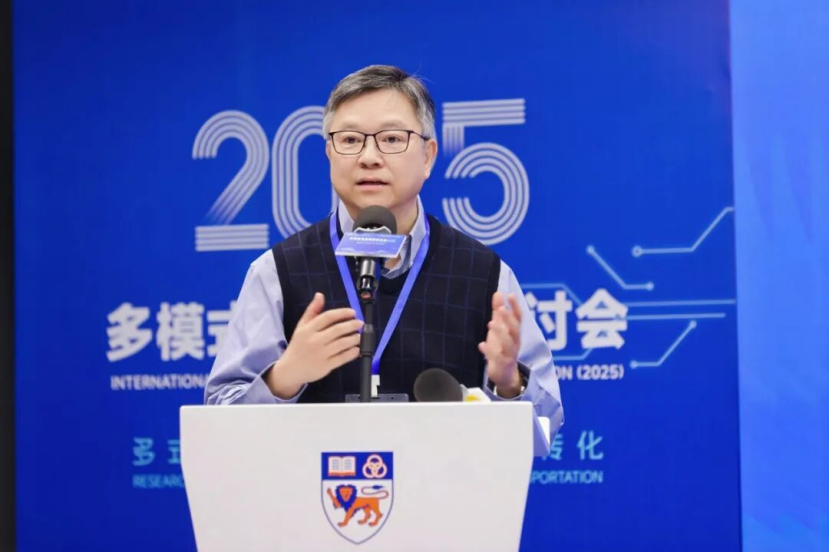
The presentations, focused on the forefront and offering profound insights, sparked lively discussions among the audience.
18 Parallel Sessions for In-Depth Exchange,
Over 100 Presentations on Cutting-Edge Topics
The symposium featured 18 parallel technical sessions, delving into frontier topics such as logistics supply chains, multimodal transport planning, electrified transportation, freight networks, autonomous driving, low-altitude systems, green energy, AI optimization, travel behavior, and traffic safety. The latest research outcomes from global universities, research institutions, and industry enterprises were shared and discussed in these sessions, fully demonstrating the vibrant dynamism in technological development, theoretical innovation, and engineering practice within the multimodal transportation field. This highlighted the enduring academic cohesion of the ISMT conference series and further affirmed the significant value and industry influence of multimodal transportation research in advancing the global transport system upgrade.
Adhering to the principles of “fair, open, and just” academic review, the symposium committee selected and presented two honors from the presenters in the parallel sessions: the Best Paper Award and the Best Presenter Award, recognizing the recipients’ outstanding academic achievements and excellent presentations.
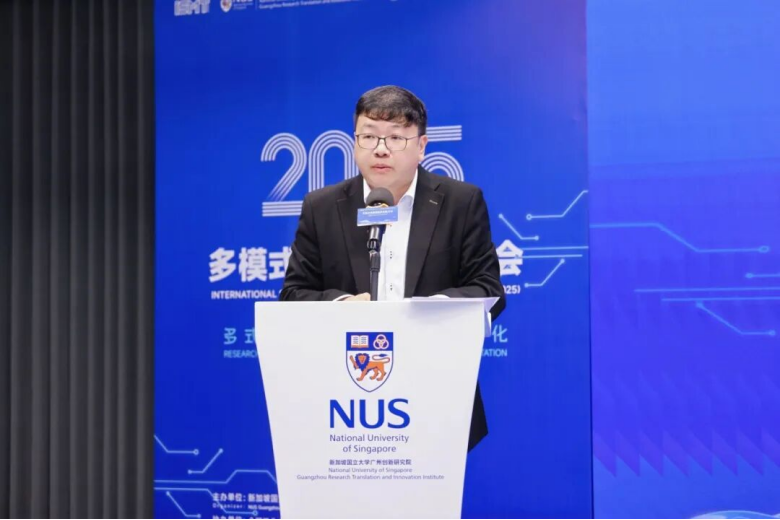
During the closing ceremony, Associate Professor Ghim Ping Raymond Ong, ISMT 2025 Co-Chair, Deputy Head (Research and Enterprise) in the Department of Civil and Environmental Engineering at NUS, and a lecturer and assistant professor, delivered a concluding speech. Associate Professor Ong noted that this year’s symposium facilitated in-depth discussions in areas like autonomous driving, smart logistics, and sustainable infrastructure, fully showcasing the breadth and depth of multimodal transportation research. He emphasized that the fundamental mission of such symposiums is to advance the translation of academic outcomes into real-world impact, genuinely serving societal development. Associate Professor Ong expressed sincere gratitude to the symposium chairs, keynote speakers, organizing committee, and all participants for their contributions, and looked forward to future collaboration to jointly promote innovative breakthroughs and synergistic development in the transportation field.
Successful Conclusion, Embarking on a New Journey
The two-day ISMT 2025 featured both high-level strategic insights focused on the industry’s future, conveying visionary perspectives on multimodal transportation development, as well as meticulous technological breakthroughs rooted in the frontiers, showcasing the vibrant results of integrating research and practice. As a cross-disciplinary academic event, ISMT 2025 successfully established a high-quality dialogue bridge for “interdisciplinary integration, cross-regional linkage, and cross-industry collaboration,” injecting solid and fresh momentum into advancing global multimodal transportation systems towards a smarter, more efficient, greener, and more inclusive future.
The conclusion of this successful event marks the beginning of a new journey. We eagerly anticipate witnessing the next wave of innovation and vitality in multimodal transportation at ISMT 2026 next year, reuniting with global colleagues to explore new development pathways and jointly chart a new blueprint for transportation transformation.