On December 9, 2025, the Greater Bay Area Science Forum (GSF) 2025 Sub-Forum on Intelligent Systems and Industrial Innovation Applications was successfully held at the National University of Singapore Guangzhou Research Translation and Innovation Institute (NUS GRTII). Initiated by the Alliance of National and International Science Organizations for the Belt and Road Regions (ANSO) and hosted by the People’s Government of Guangdong Province, the Greater Bay Area Science Forum (GSF) is a globally influential scientific event. This sub-forum, hosted by NUS GRTII and supported by Singapore Global Network, brought together government, industry, academia, and research sectors to explore new pathways for intelligent technology to empower the high-quality development of modern industrial systems.
Fellow of Academy of Engineering of Singapore, Director of NUS GRTII, Professor Shuzhi Sam GE, along with government and institutional representatives including Mr. Wu Hanrong, Deputy Director-General of the Guangzhou Municipal Science and Technology Bureau, Mr. Wang Datong, Deputy Secretary of the Party Working Committee of Guangzhou Development District, and Ms. Zeng Xueling, Member of the Leading Party Members Group and Vice Chairperson of the Guangzhou Association for Science and Technology, attended the event. Nine principal investigators from the National University of Singapore (NUS), alongside representatives from provincial, municipal, and district government departments, universities, research institutions, and enterprises, gathered to chart a collaborative innovation landscape for intelligent systems, from cutting-edge research to industrial implementation.
Forum Opening and Addresses
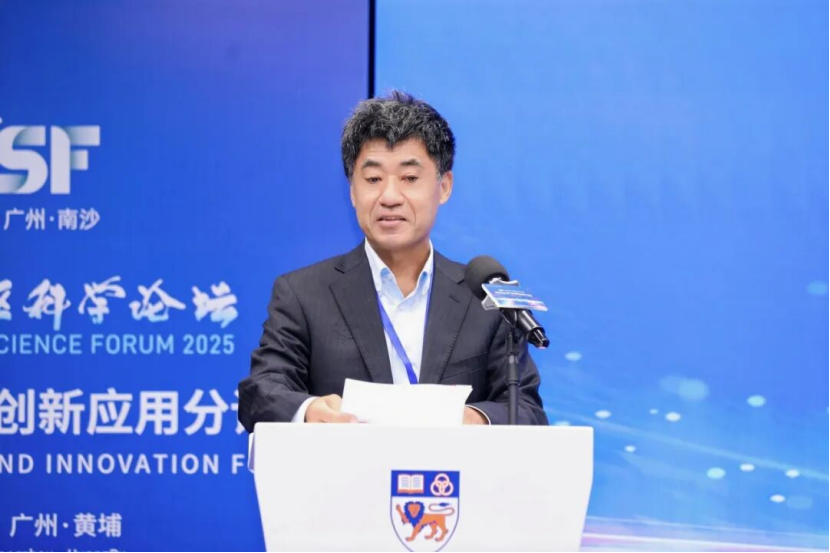
The forum commenced with an opening address by Mr. Wu Hanrong, Deputy Director-General of the Guangzhou Municipal Science and Technology Bureau. He pointed out that Guangzhou is fully advancing the construction of the Guangdong-Hong Kong-Macao Greater Bay Area International Science and Technology Innovation Center. Focusing on the entire chain of sci-tech innovation development, Guangzhou is committed to connecting with international high-quality innovation resources and has achieved a series of international cooperation outcomes, laying a solid foundation for deepening high-level scientific exchange and collaboration. Deputy Director-General Wu further stated that it is essential to leverage the advantages of international cooperation platforms like the China-Singapore Guangzhou Knowledge City, deepen government-industry-university-research collaboration, and accelerate the integrated application of intelligent technologies in scenarios such as healthcare, transportation, and manufacturing. He expressed his hope that this forum would effectively promote in-depth exchange and cooperation in the scientific and technological fields, jointly driving industrial innovation and high-quality development in the Greater Bay Area.
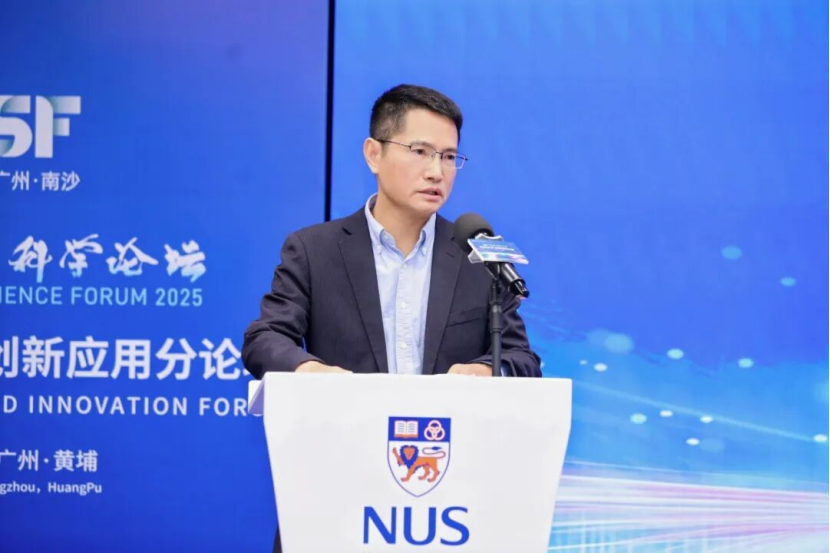
Subsequently, Fellow of Academy of Engineering of Singapore, Director of NUS GRTII, Professor Shuzhi Sam GE, addressed the forum. He stated that as NUS’s flagship platform serving the Guangdong-Hong Kong-Macao Greater Bay Area, NUS GRTII will continue to promote international scientific research collaboration and the implementation of outcomes in the field of intelligent systems. He emphasized that the forum aims to bridge the “technology-to-industry” translation pipeline, accelerate the application of frontier technologies like robotics and smart healthcare within the Bay Area, and contribute to building a globally influential intelligent innovation ecosystem.
Gathering of Top Scholars:
Multidimensional Insights Empowering Innovation
This sub-forum specially invited nine leading scholars from NUS—who are also principal investigators at NUS GRTII—to deliver keynote speeches. The professors shared forward-looking and practically aluable academic insights and technological achievements centered on breakthroughs in fundamental research and industrial application practices, covering frontier fields such as robotics, spintronics, intelligent transportation, and medical AI.
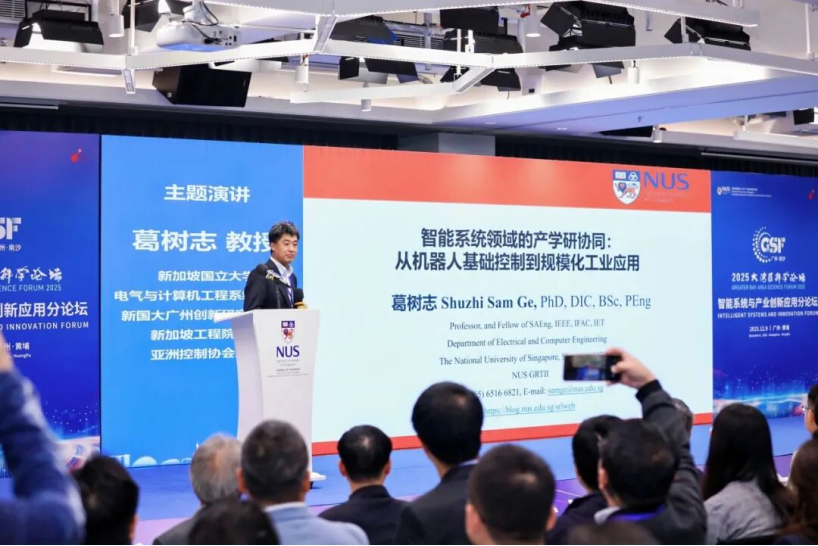
Fellow of Academy of Engineering of Singapore, Director of NUS GRTII, Professor Shuzhi Sam GE, delivered a keynote speech titled “Industry-University-Research Collaboration in Intelligent Systems: From Fundamental Robot Control to Scalable Industrial Applications.” He systematically elaborated on how his team has achieved full-chain innovation from fundamental theoretical breakthroughs to implementation in complex industrial scenes by constructing a closed-loop system of “algorithm-perception-platform-verification.”
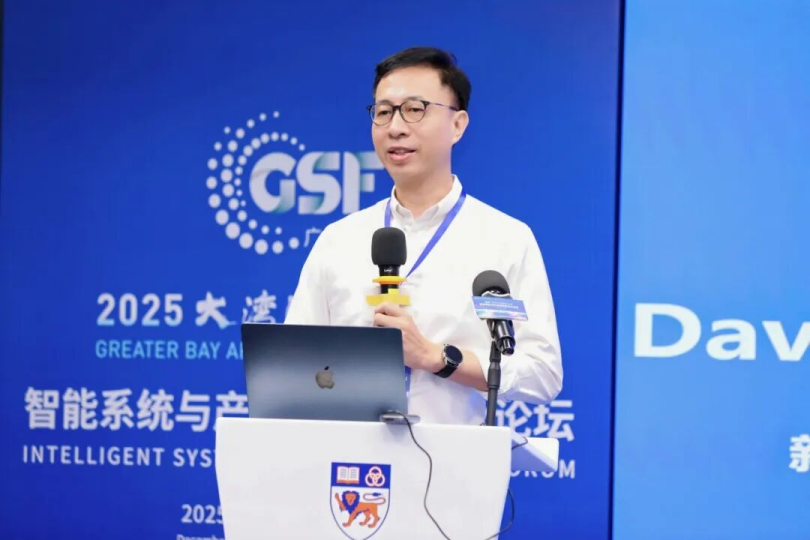
Professor David Hsu, Provost’s Chair Professor in the Department of Computer Science and Director of the Smart Systems Institute at NUS, focused on “Robot Navigation in Open Environments.” He shared his team’s innovative application of data-driven foundational models for robotics. He noted that by integrating large-scale prior knowledge with adaptive learning mechanisms, this model effectively breaks down the technical barriers between traditional closed simulation environments and real-world open scenes, paving a new path for robots to achieve reliable autonomous operation in complex, dynamic, and unknown environments.
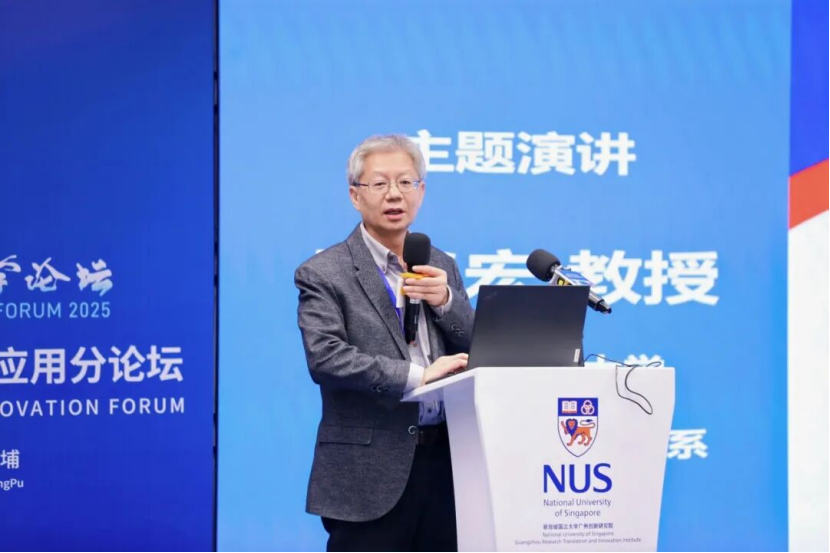
Professor Wu Yihong from the Department of Electrical and Computer Engineering at NUS gave a speech titled “Spintronics for Intelligent Sensing and Next-Generation Intelligent Systems.” He introduced novel magnetic sensor technologies based on Spin-Hall Magnetoresistance (SMR) and Spin-Transfer Gate (STG), enabling linear, low-noise, three-dimensional magnetic field measurement without the need for external bias, providing a new physical foundation for highly integrated, low-cost intelligent perception.
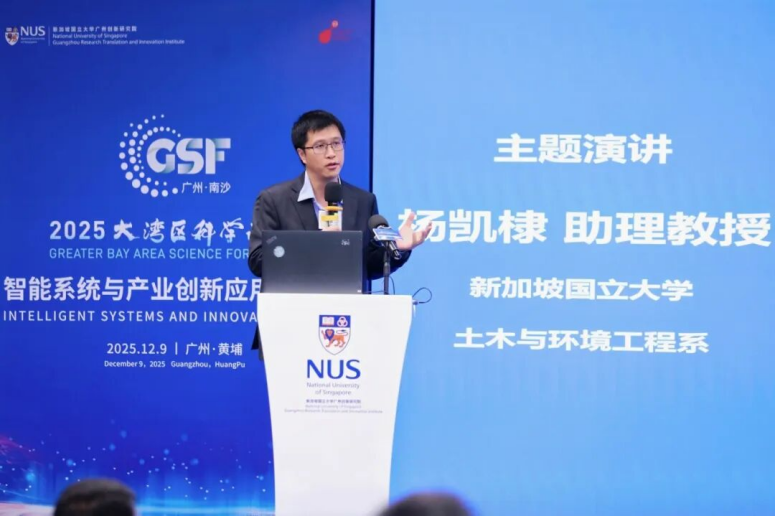
Assistant Professor Yang Kaidi from the Department of Civil and Environmental Engineering at NUS spoke on “Trustworthy Perception and Decision-Making for Intelligent Transportation Systems.” He explored how to balance privacy protection and collaborative efficacy in multi-source data fusion and emphasized that vehicle-infrastructure cooperation and autonomous driving must embed social value norms such as safety and fairness to build a truly trustworthy future transportation system.
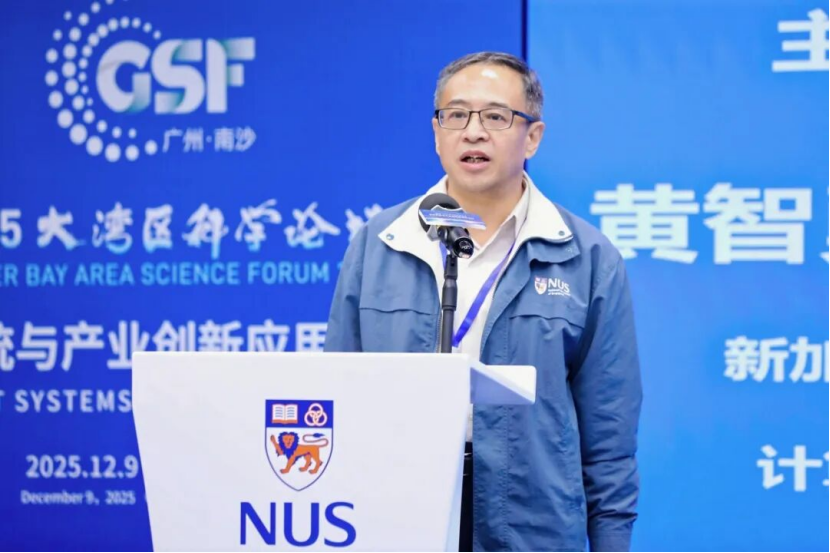
Mr Zhiyong Huang, an Associate Professor from the Department of Computer Science, NUS School of Computing and Director of the Computing Translational Research and Development Centre at NUS, presented on “AI Research and Research Translation at the NUS School of Computing,” offering a panoramic view of NUS’s research landscape in areas like machine learning, computer vision, and human-computer interaction.
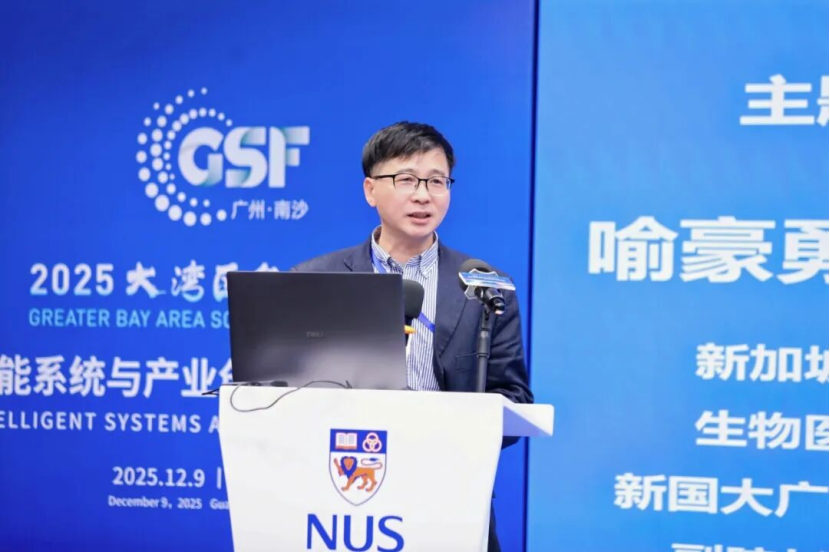
Associate Professor Yu Haoyong from the Department of Biomedical Engineering and Associate Director (Research Translation) of NUS GRTII, delivered a keynote on “Intelligent Wearable Robots and Their Applications in Healthcare and Industry.” He shared his team’s modular exoskeleton system based on flexible actuation, cable transmission, and AI motion recognition, significantly enhancing human-robot interaction comfort and portability, offering viable solutions for rehabilitation and industrial assistance in an aging society.
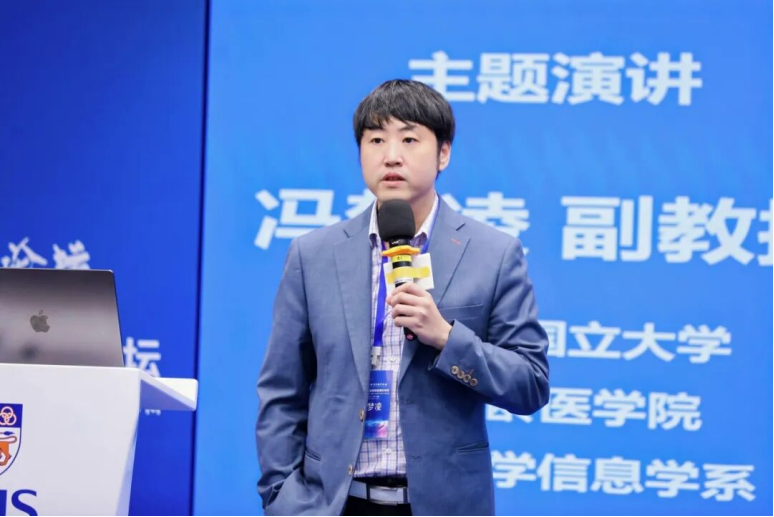
Associate Professor Feng Mengling from the Saw Swee Hock School of Public Health and Director of the AI Research Centre for Public Health at NUS, presented on “Embodied AI: An Assistant Tool for Pre-hospital Emergency Care.” She showcased her team’s AI “call-taker partner” that can parse emergency calls in Singlish-mixed contexts in real-time and accurately recommend triage levels. It is estimated to reduce unnecessary ambulance dispatches by 3,300 annually, demonstrating how technology can efficiently optimize public healthcare resources.
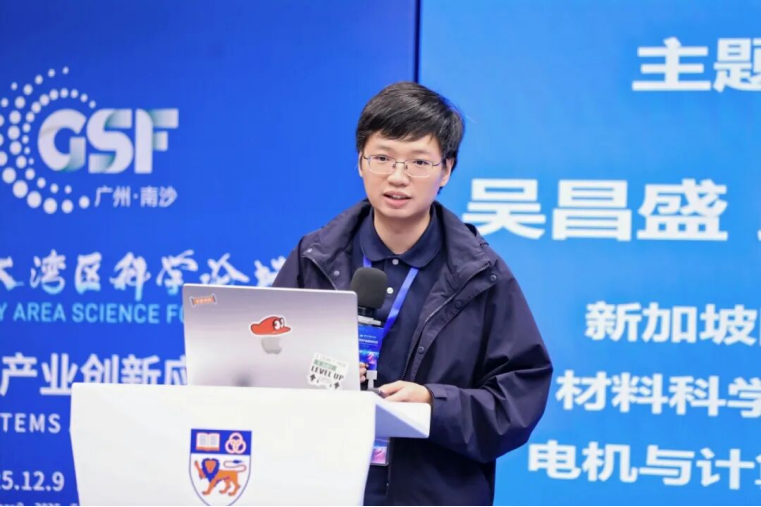
Assistant Professor Changsheng Wu, NUS Presidential Young Professor in the Department of Materials Science and Engineering (MSE) and the Department of Electrical and Computer Engineering at NUS, spoke on “Advancing Wearable Devices and Robotic Technologies for Physical Intelligence.” He shared the interdisciplinary integration pathways of wearable systems in energy harvesting, biosensing, and therapy, promoting the practical application of “body-conforming” intelligent terminals.

Assistant Professor Jin Yueming from the Department of Biomedical Engineering and the Department of Electrical and Computer Engineering at NUS focused on “Multimodal Large Models Empowering Smart Digital Healthcare.” She elaborated on how to integrate heterogeneous data such as medical images, text, and physiological signals to construct medical large models with clinical reasoning capabilities, providing a new generation of digital infrastructure for personalized diagnosis, treatment, and health management.
Industry Dialogues:
Co-building a New Intelligent Bay Area Ecosystem
The sub-forum featured two high-level panel discussions, inviting experts from leading enterprises, clinical institutions, investment platforms, and the frontline of research translation to engage in in-depth dialogue.

The session “Intelligent Bay Area·Air-Ground Synergy: Intelligent Systems Driving the New Future Industry Ecosystem” was moderated by Ms. Wang Jia, Deputy Secretary of the Party Committee of Guangzhou Development District Transport Investment Group. Participants included Dr. Xie Zhendong, Chief Engineer of the Guangzhou Public Transport Group, Mr. Zhang Hong, Vice President of EHang Intelligent Equipment Co., Ltd., and Mr. Zhao Jie, Senior Vice President of Nexwise Smart Technology Co., Ltd. The panelists unanimously agreed that the industrial application of intelligent systems requires a tripartite linkage of “technological innovation, policy support, and open scenarios.” They suggested leveraging the Greater Bay Area’s industrial foundation to accelerate the establishment of low-altitude flight management standards and vehicle-infrastructure cooperative data-sharing mechanisms,promoting the deep integration of intelligent transportation and the low-altitude economy.
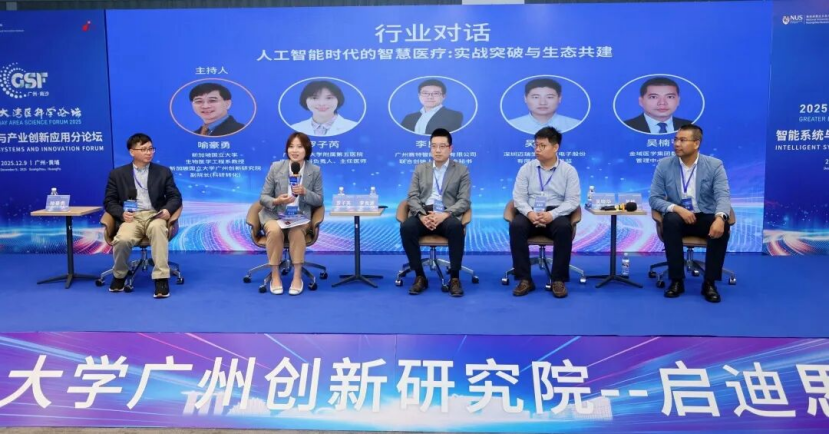
The session “Smart Healthcare in the AI Era: Breakthroughs in Practice and Ecosystem Co-construction” was moderated by Associate Professor Yu Haoyong, Associate Director (Research Translation) of NUS GRTII. Participants included Ms. Luo Zirui, Chief Physician at the Fifth Affiliated Hospital of Guangzhou Medical University; Mr. Li Liangyuan, Co-founder of Guangzhou SAITE Intelligent Technology Co., Ltd.; Mr. Wu Xiaohua, R&D Director of Shenzhen Mindray Bio-Medical Electronics Co., Ltd.; and Mr. Wu Nan, General Manager of the Digital Management Center of KingMed Diagnostics Group Co., Ltd. The panelists engaged in dialogue focusing on the clinical translation of smart healthcare, emphasizing that the development of medical AI must adhere to a “clinical value-oriented” approach. They highlighted the urgent need to overcome key bottlenecks such as data security compliance, algorithm interpretability, and system interoperability through deep industry-university-research collaboration, truly enabling intelligent technology to serve the improvement of diagnostic and treatment efficiency, the optimization of rehabilitation experiences, and whole-life-cycle health management.
Rooted in the Bay Area, Connecting Globally
As NUS’s flagship platform for participating in the development of the Guangdong-Hong Kong-Macao Greater Bay Area, NUS GRTII is consistently committed to promoting the translation of international scientific and technological achievements, facilitating two-way talent flow, and serving regional industrial upgrading. The successful hosting of this sub-forum further deepens interdisciplinary and cross-regional research collaboration, accelerates achievement industrialization and talent development in core fields. NUS GRTII will continue to host more high-level academic exchange activities, promote the precise alignment of Singapore’s advanced technologies with the industrial needs of the Greater Bay Area, and contribute to establishing the Guangdong-Hong Kong-Macao Greater Bay Area as a new global highland for intelligent science and technology innovation and industrial application.