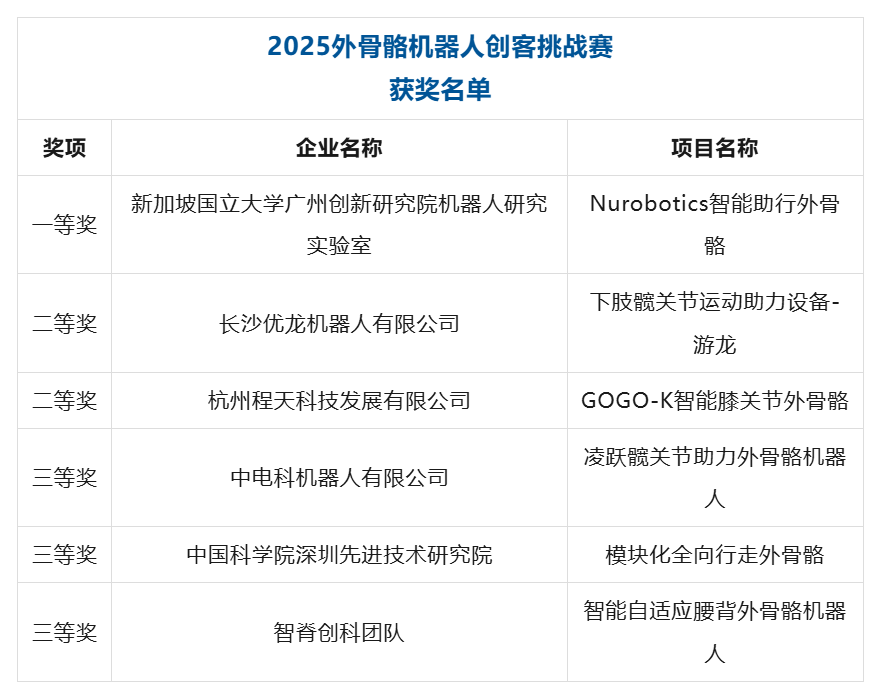
At the 11th China International Silver Industry Exhibition (SIC), the Robotics Research Laboratory of the National University of Singapore Guangzhou Research Translation and Innovation Institute (NUS GRTII) showcased its self-developed “Nurobotics Smart Walking Exoskeleton,” securing the First Prize at the 2025 Exoskeleton Maker Challenge. Held from November 27 to 29, 2025, at the Poly World Trade Center Expo in Guangzhou, the event gathered cutting-edge products and solutions in the senior care technology sector from across the globe, attracting a significant number of industry experts, rehabilitation professionals, and technology enthusiasts for in-depth exchanges.
SIC
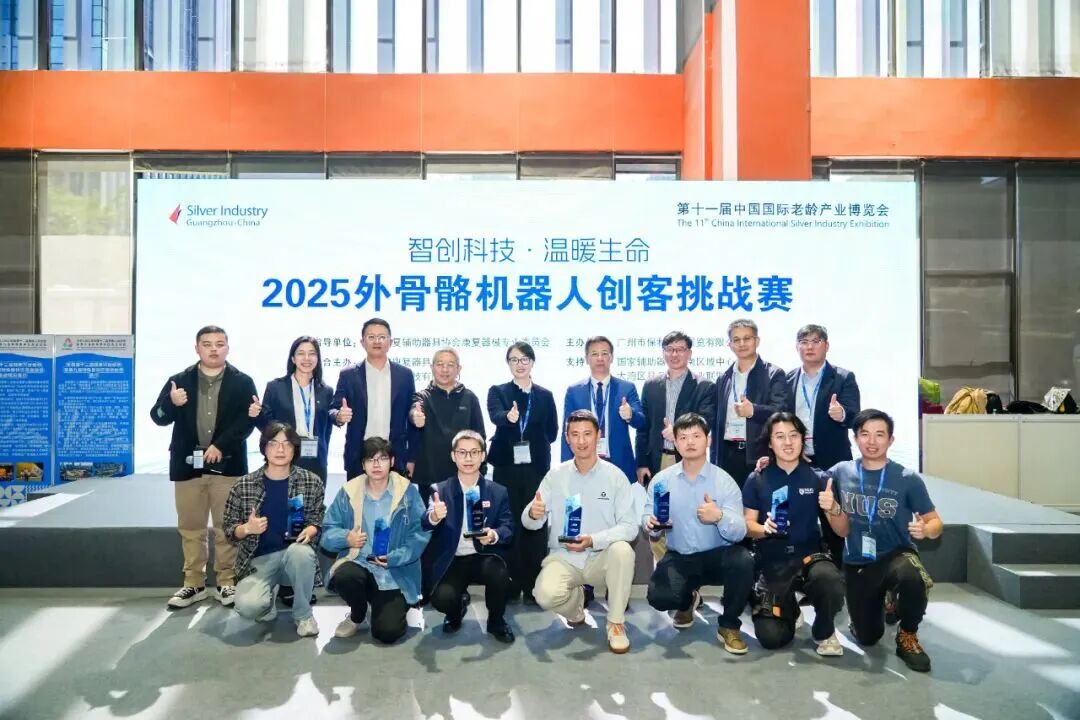
As a highlight of the expo, the 2025 Exoskeleton Maker Challenge commenced on November 28. Guided by the Rehabilitation Equipment Committee of the China Association of Assistive Products and under the joint organization of the Shanghai Rehabilitation Device Association and the Shenzhen Institute of Advanced Technology, Chinese Academy of Sciences, the competition saw dozens of teams from universities, research institutes, and tech enterprises across the nation competing. After rigorous evaluation by a panel of authoritative industry experts across multiple dimensions including innovation, technical solutions, application potential, and on-site performance, six teams advanced to the finals.
The final round was intensely competitive and showcased remarkable innovations. Top teams from across China presented their flagship products, such as lower-limb hip-joint motion-assist devices, intelligent knee exoskeletons, and modular omnidirectional walking exoskeletons, each demonstrating cutting-edge R&D capabilities in the field.
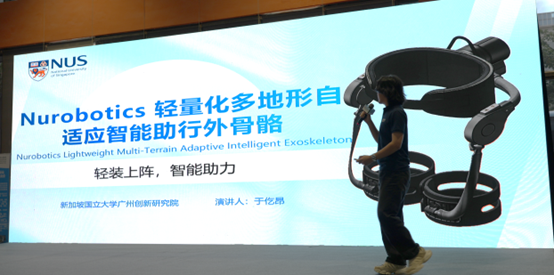
NUS GRTII participated with its self-developed Nurobotics Smart Walking Exoskeleton. The product was developed under the leadership of Associate Professor Yu Haoyong, Associate Director (Research Translation) of the Institute, through a collaborative effort between the Institute’s Robotics Research Laboratory and the NUS Biorobotics Lab, both led by him.
During the on-site demonstration in the finals, the Nurobotics exoskeleton exhibited exceptional environmental adaptability and human-robot synergy. Faced with complex, unstructured terrains such as slopes, gravel paths, and sudden inclines, the system could sense the user’s movement intent in real-time, dynamically adjust its assistance strategy, and precisely match individual gait characteristics - all without the need for manual intervention or mode switching. Its lightweight mechanical structure, high-robustness control algorithms, and excellent wearing stability garnered unanimous praise from the judging panel.
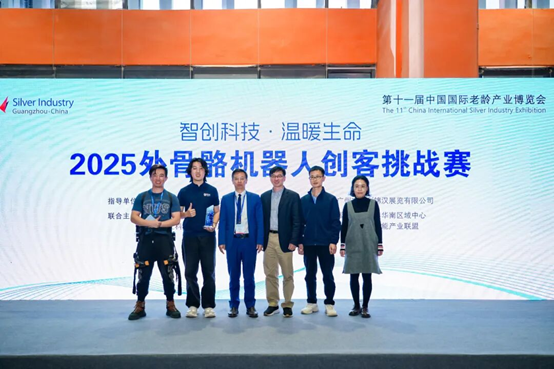
After fierce competition, the Nurobotics exoskeleton stood out from numerous outstanding entries with its innovative technologies, such as a single-motor differential structure, a high-stability myometric sensing array, and a robust vector field control algorithm that eliminates the need for gait phase estimation. It was awarded the First Prize of the 2025 Exoskeleton Maker Challenge. The product addresses the limitations of traditional exoskeletons in adapting to complex terrains and response speed, achieving precise power assistance and scene adaptability. Moreover, this achievement signifies a major milestone in NUS GRTII’s efforts in research translation. Relevant technologies have applied for national invention patents.
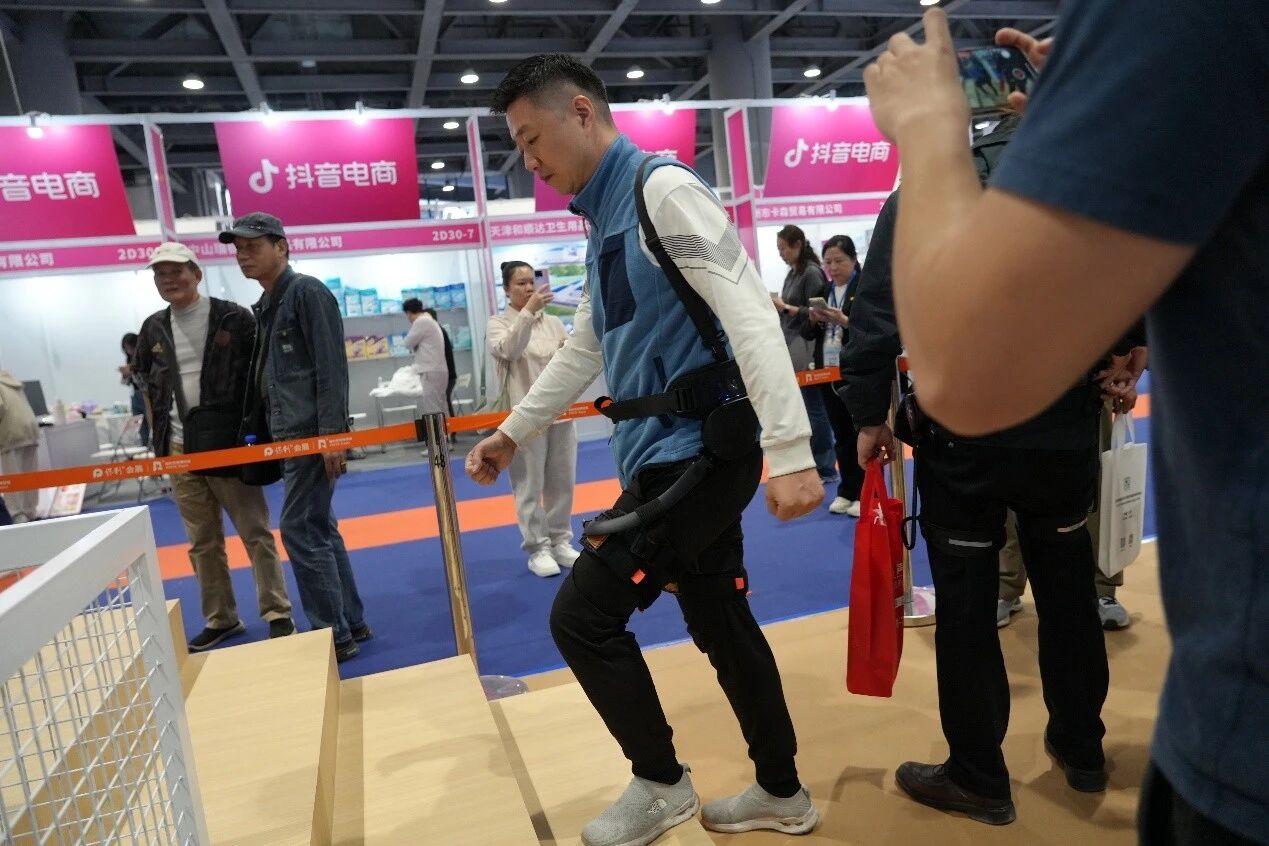
During the SIC, NUS GRTII’s booth attracted numerous visitors for hands-on experience. Many professionals in the rehabilitation field showed keen interest in the product’s innovations in lightweight design and terrain adaptability, engaging in detailed discussions about its technical specifics and application scenarios. Under professional guidance, many visitors tried on the exoskeleton, personally experiencing the natural assistance it provides in daily activities such as walking and climbing stairs—scenarios that resonate with the practical tasks emphasized in global assistive technology challenges.
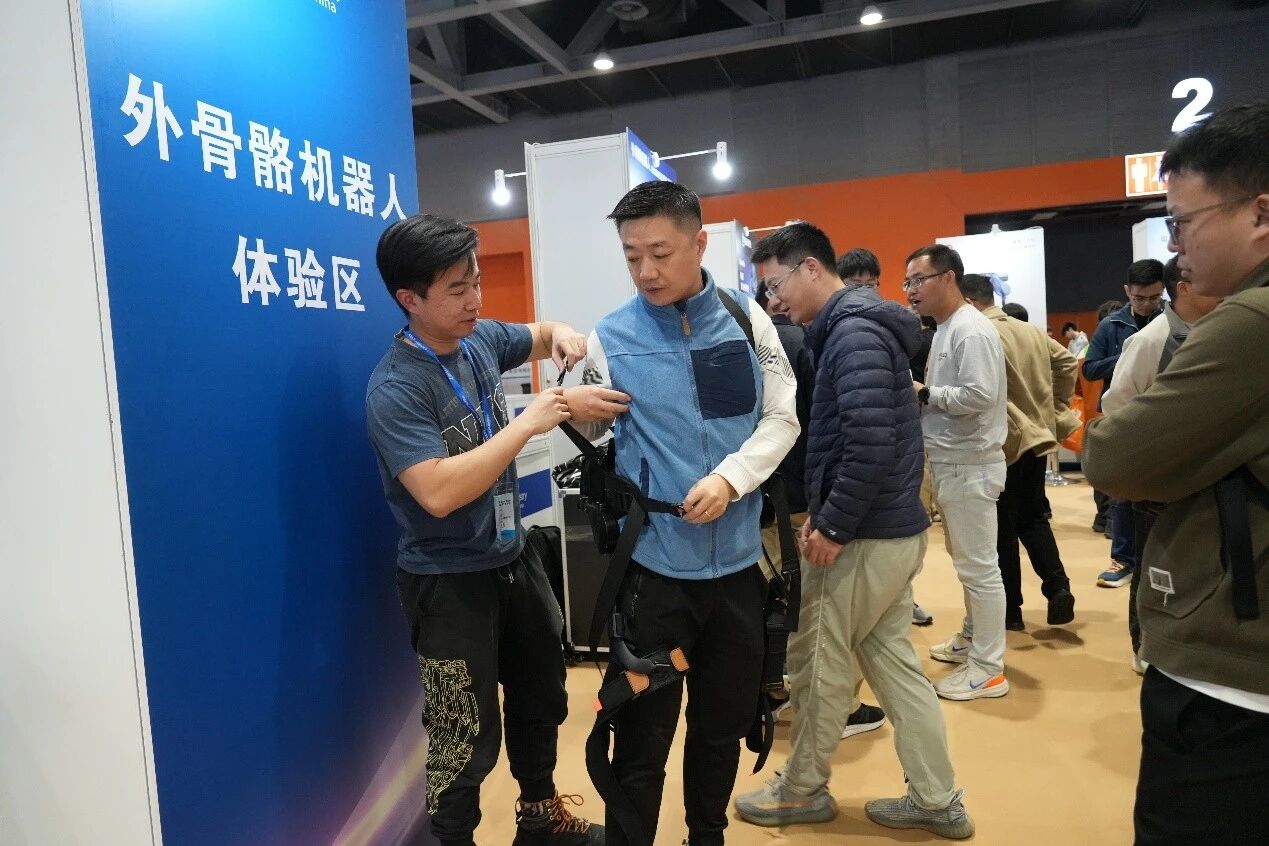
This competition and showcase served not only as a significant validation of the Institute’s technological achievements but also as a valuable platform for industry exchange and collaboration. It affirmed the team’s technical R&D strength and highlighted the vast application prospects of exoskeleton robots in elderly assistance, disability support, and rehabilitation medicine.
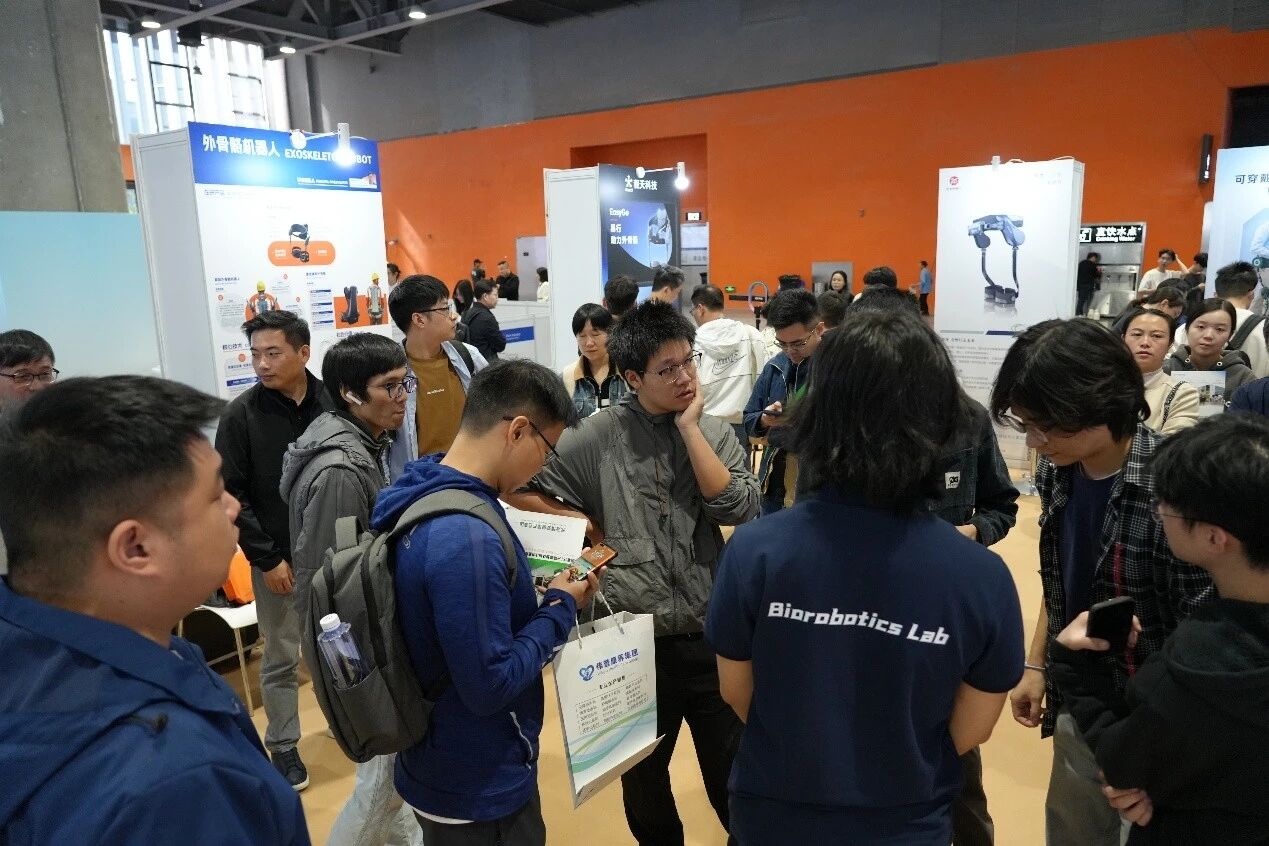
Moving forward, the Robotics Research Laboratory at NUS GRTII will continue to deepen the exploration of exoskeleton technology applications in elderly assistance, disability support, and rehabilitation medicine. It will focus on optimizing the product’s scenario adaptability and user experience, ensuring that technology better serves the needs of elderly care and rehabilitation. The Institute also looks forward to collaborating with industry partners to jointly promote the industrialization of scientific and technological achievements, contributing to building a better society empowered by technology.