As global challenges increasingly span technology, health, policy and society, NUS has embedded interdisciplinarity into its core research strategy to bring diverse expertise together and translate knowledge into practical, real-world solutions.

NUS is home to Hopper, Singapore’s top-ranked supercomputer and Southeast Asia’s only university-operated supercomputing system, powering AI+X and interdisciplinary research with advanced HPC and GPU capabilities.
As challenges such as climate change, digital transformation, public health and urban sustainability grow ever more complex and interconnected, their solutions increasingly lie at the intersection of disciplines rather than within any single field. Interdisciplinary research allows insights from different fields to converge, leading to solutions that deliver societal and economic impact while training graduates and researchers to work and collaborate effectively across sectors.
Recognising this shift from the outset, the National University of Singapore (NUS) has, over many years, embedded interdisciplinary research into its core research strategy, shaping how the University brings together expertise across science, engineering, medicine, social sciences and the humanities.
Professor Liu Bin, NUS Deputy President (Research and Technology), said, “Many of today’s challenges span technological, social and policy dimensions, and solving them requires integrated perspectives, close cross-disciplinary collaboration, and partnerships that connect research to real-world needs. At NUS, we intentionally build interdisciplinarity into our research platforms, funding schemes and collaborative environments, so our researchers can work beyond traditional academic boundaries.”
Addressing complex challenges through collaboration
To support this, NUS has developed platforms that empower cross-disciplinary collaboration both within the University and with partners in government, industry and academia. Researchers are connected through joint programmes, workshops and shared research environments, with common infrastructure that encourages collaboration and exchange of ideas.
One of the successful examples is the NUS Smart Nation Research Cluster (SNRC), established in 2018. Today, SNRC brings together more than 13 research centres and institutes, placing researchers from Science, Technology, Engineering and Mathematics (STEM) disciplines alongside experts in the Humanities and Social Sciences (HSS) to address national needs. Research under SNRC spans a wide range of areas such as artificial intelligence (AI), automation, data and cybersecurity, green finance, logistics, and the public understanding of risk. Supporting these efforts is the innovation4.0 (i4.0) building, a hub for digital innovation and research under SNRC, allowing researchers to tap shared expertise and tools while working alongside partners exploring digital transformation solutions under one roof.
NUS’ interdisciplinary approach has enabled a pipeline of projects across domains, from digital defence and climate resilience to public policy simulation tools. For instance, NUS researchers are drawing on expertise from STEM and HSS to tackle challenges in the digital information space. Through the Information Gyroscope (iGyro) programme, a five-year initiative involving researchers from computing, social sciences, law, business, engineering and public policy, NUS teams study how false information spreads online and develop ways to strengthen digital information resilience. The programme also studies how policies and regulations evolve globally to counter misinformation, providing insights to support future governance approaches.
In a major push to deepen computationally powered social science and humanities research, NUS recently launched the Centre for Computational Social Science and Humanities (CSSH). This interdisciplinary hub combines AI, network analysis, and simulations with domain expertise to study social phenomena and tackle societal challenges in areas like social media, health, environment, and culture. For example, CSSH is leading a project to develop AI-enabled social simulations for policymakers to refine their ideas before real-world implementation.
These initiatives are resulting in stronger and broader scholarly collaboration. The share of NUS publications co-authored by STEM and HSS researchers has risen steadily, especially in the past five years, compared with the preceding period. Notably, more than 70% of these publications involved international collaborators, reflecting how interdisciplinary work can also be a catalyst for global collaboration.
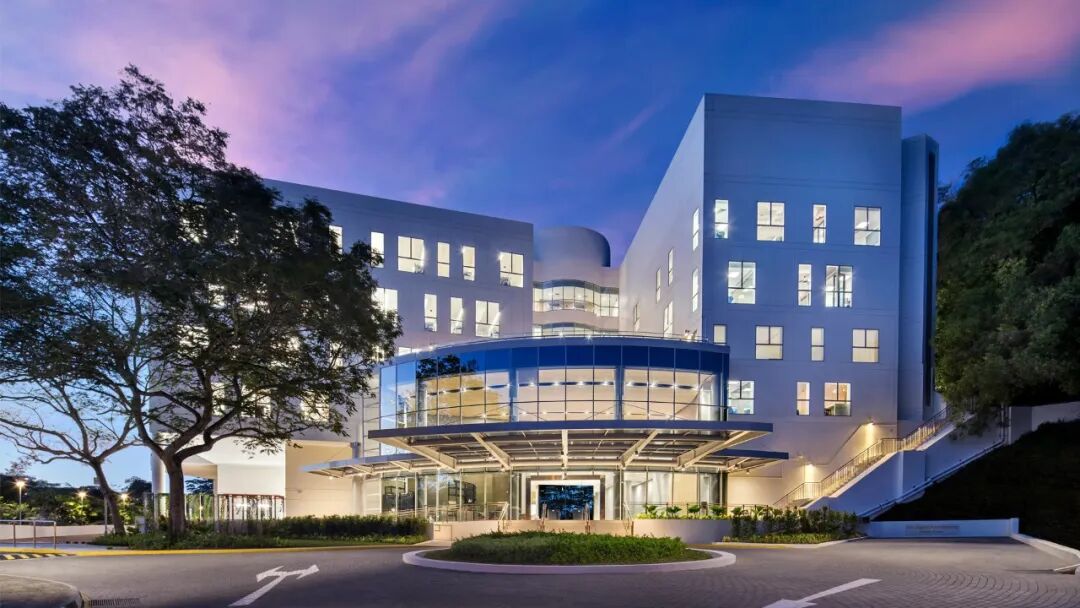
▲The innovation4.0 building at NUS, a six-storey building with 15,400 sqm, is a hub for digital innovation and research under the Smart Nation Research cluster. Here, researchers share expertise and tools and collaboratively explore digital transformation solutions under one roof.
An ecosystem that enables interdisciplinary research to flourish
At NUS, funding, shared research spaces and facilities, talent development and partnerships work together to catalyse collaboration across disciplines and spur the translation of research into real-world impact.
Strong institutional commitment
NUS has increased investment in interdisciplinary science research in recent years. In 2024, NUS has invested S$20 million, along with external funding, to kick-start the NUS Artificial Intelligence Institute (NAII), to advance foundational AI research, examine the policy and societal implications of AI, and translate capabilities into real-world applications across domains, such as education, healthcare, sustainability, logistics and supply chains. By pairing AI specialists with domain experts to support real-world deployment, NAII has strengthened industry and ecosystem engagement, enabled new collaborative projects, and served as a strong training platform for interdisciplinary, future-ready graduates.
Similarly, NUS Sustainable Futures was established to drive interdisciplinary solutions to climate and resource challenges, delivering scalable innovations in green energy, sustainable cities, and heat resilience for a balanced future.
Complementing these efforts, since 2021, NUS’ research office has provided over S$10 million in seed funding to catalyse interdisciplinary collaborations and grow over 20 strong research projects. In FY2025, a further S$5 million was committed to support 19 interdisciplinary projects spanning multiple faculties, with a strong emphasis on STEM-HSS collaboration to strengthen the culture of interdisciplinary collaboration across faculties. Building on this momentum, NUS will be committing S$5 million annually for the next three years in seed funding to support interdisciplinary research.
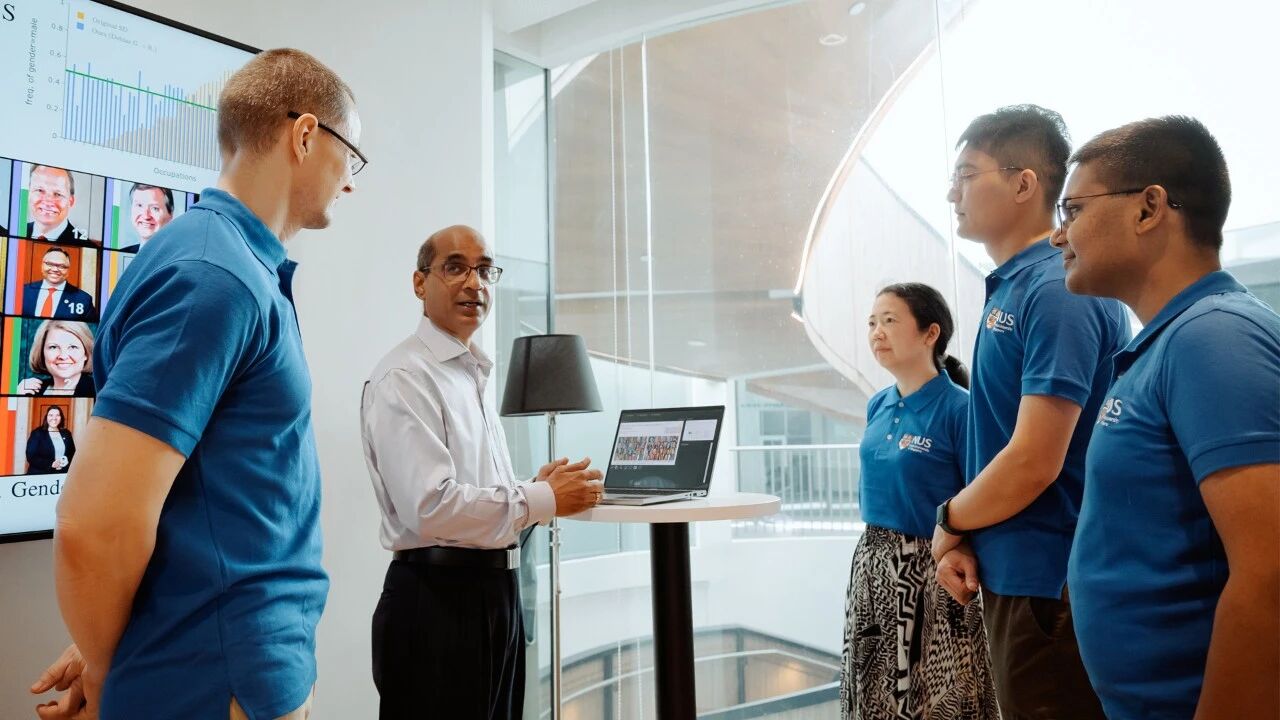
▲At the NUS AI Institute, AI specialists are paired with domain experts to develop innovative solutions for real-world applications across areas such as education, healthcare, sustainability, logistics and supply chains.
Cutting-edge platforms and research environments
By building cutting-edge research platforms and shared spaces, NUS brings diverse expertise together, enabling collaboration and accelerating translation from discovery to real-world impact.
To facilitate interdisciplinary research, NUS developed an online database showcasing several hundred high-value equipment and facilities available to researchers from NUS as well as collaborating institutes across Singapore’s research ecosystem. This builds on our ongoing participation in various nationwide facility sharing initiatives, including SingMass for mass spectrometry facilities, SingaScope for microscopy facilities, and SingEM for electron microscopy facilities. To foster national and international collaboration, these facilities are open to researchers from other universities and industry partners.
These initiatives enable researchers across disciplines to access specialised tools, data and experimental capabilities, while creating natural spaces for collaboration and the exchange of ideas. The Engineering-in-Medicine hub, for example, connects engineering, medicine, science and entrepreneurship, bringing researchers, clinicians and external partners together to translate healthcare technologies from laboratory research into clinical workflows and real-world applications.
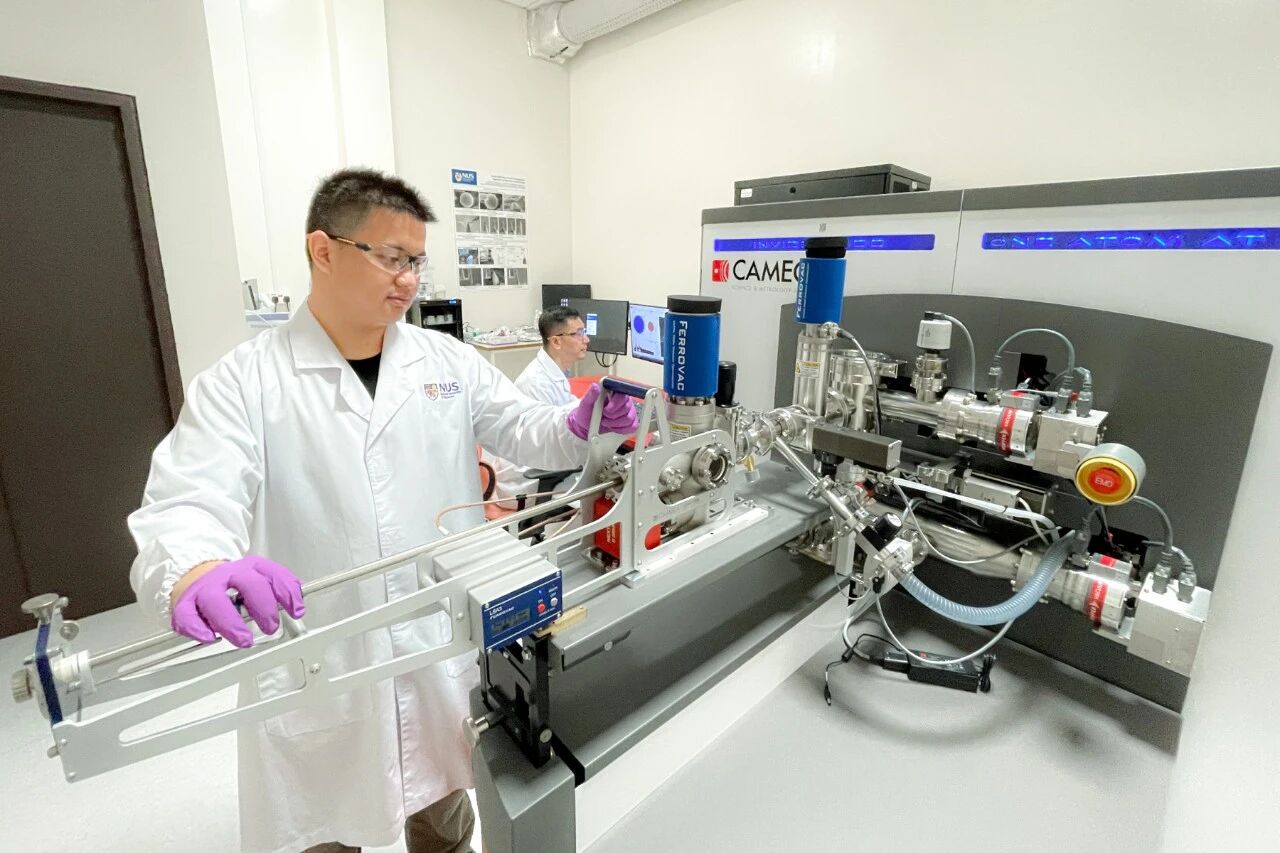
▲The Invizo 6000 3D Atom Probe microscope at NUS is one of only seven in the world and the first in ASEAN. It enables 3D imaging and chemical analysis of materials at the atomic level. Its high precision makes it a valuable tool for developing next-generation materials and devices.
Talent development and interdisciplinary education
NUS strengthens interdisciplinarity by aligning talent policies and education pathways around team-based, cross-domain research and problem-solving.
Promotion and tenure at NUS incorporate frameworks that recognise contributions across disciplinary boundaries and team-based science. Cross-faculty hiring committees also support recruitment that strengthens multidisciplinary capabilities, including emerging areas such as AI+X and sustainability. In education, new interdisciplinary colleges, such as College of Humanities and Sciences (2020), College of Design and Engineering (2021) and NUS College (2022) were established to bring disciplines closer through shared curricula, thematic clusters and joint research platforms.
Innovation and Societal Impact
Partnerships with government agencies, industry and academic collaborators help connect research with real-world deployment and policy needs. The Health District @ Queenstown is a vibrant living laboratory for interdisciplinary research, uniting expertise in healthcare, engineering, urban planning, and social sciences as NUS researchers partner with the Housing & Development Board, the National University Health System, and stakeholders from the public, private, and people sectors to develop, test, and deploy innovations such as devices that help seniors monitor vital signs and manage chronic conditions at home.
With more than 200 technologies rigorously evaluated and refined down to the most impactful essentials, these solutions are being rolled out to enhance residents’ quality of life and support healthier ageing across the Queenstown community.

▲Residents trying out new portable eye screening devices developed by researchers from NUS and the National University Hospital, during a roadshow organised by Health District @ Queenstown. (Photo: Health District @ Queenstown)
The future is increasingly interdisciplinary
“Looking ahead, NUS will further strengthen interdisciplinary platforms that translate research into real-world impact, while expanding strategic collaborations with government, industry and international partners. Concurrently, we are also deepening STEM–HSS collaboration across both research and education to support more holistic, impactful outcomes,” Prof Liu explained.
Together with continued interdisciplinary hiring and partnerships, NUS aims to harness expertise across disciplines to address the complex challenges facing Singapore and the wider region, translating research into practical solutions that deliver a positive impact beyond the University.
By attracting world-class talent, advancing innovation, and strengthening collaborations with key national and global partners, NUS will drive research and education with clear purpose, delivering tangible societal benefits and reinforcing our commitment to translational excellence for a brighter future.