Artificial intelligence is reshaping the business landscape at an unprecedented pace.
From generative AI and large model technologies to intelligent decision-making and business process re-engineering, AI is rapidly evolving from a technological tool into a core capability for future enterprise development.
For business leaders, the critical question is no longer merely "how to use AI," but rather how to seamlessly integrate AI into corporate strategy, organizational architectures, and operational practices to build sustained, future-ready innovation capabilities.
The Inaugural Session of the Frontier Masterclass Series on Entrepreneurial Innovation
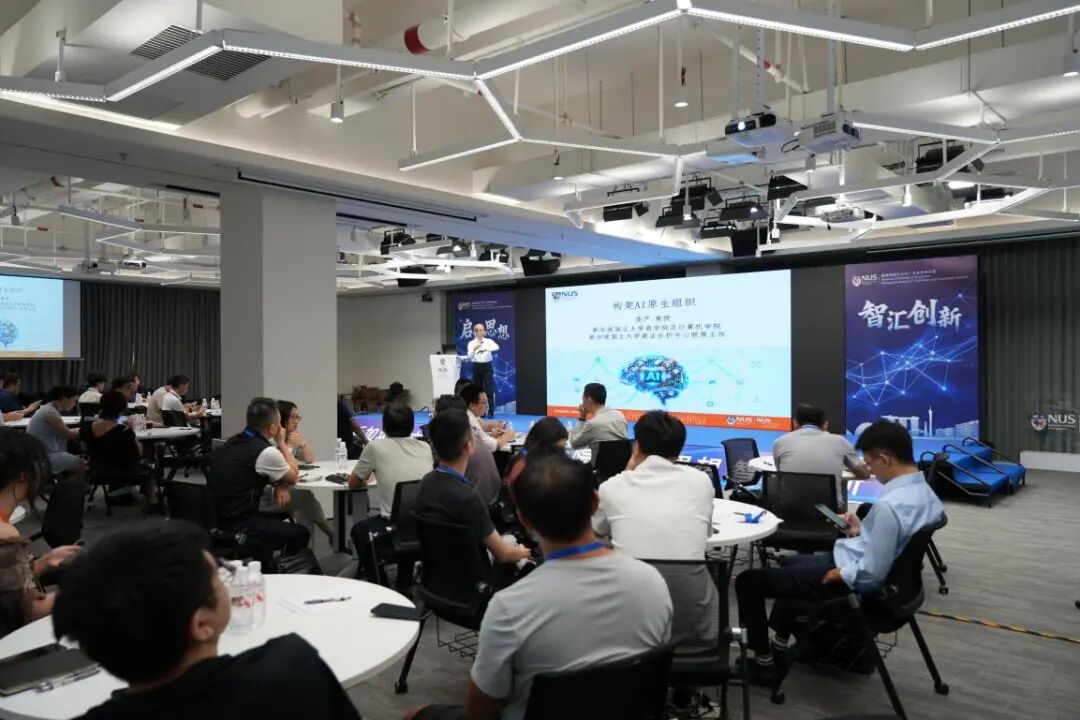
On July 24, the inaugural session of the Frontier Masterclass Series on Entrepreneurial Innovation, organized by the NUS Guangzhou Research Translation and Innovation Institute (NUS GRTII), was officially launched. Centered around the theme "Building AI-Native Organizations," the session featured Professor Yan Pang, Department of Analytics & Operations, NUS Business School & Co-Director, NUS Business Analytics Centre (BAC). Professor Pang delivered an insightful masterclass on organizational transformation and enterprise capability building in the AI era.
Corporate leaders from diverse sectors convened at NUS GRTII to engage in high-level intellectual exchange and knowledge sharing, jointly exploring strategic directions for enterprise development in the age of intelligence.
01. Insights into Industry Trends:
Rethinking Enterprise AI Transformation Pathways
Against the backdrop of rapid technological evolution, enterprise digital transformation is entering a new phase.
In the past, organizations focused primarily on deploying digital tools to enhance operational efficiency. Today, as AI technology matures, enterprises must fundamentally rethink how to cultivate organizational capabilities that enable seamless human-AI synergy.
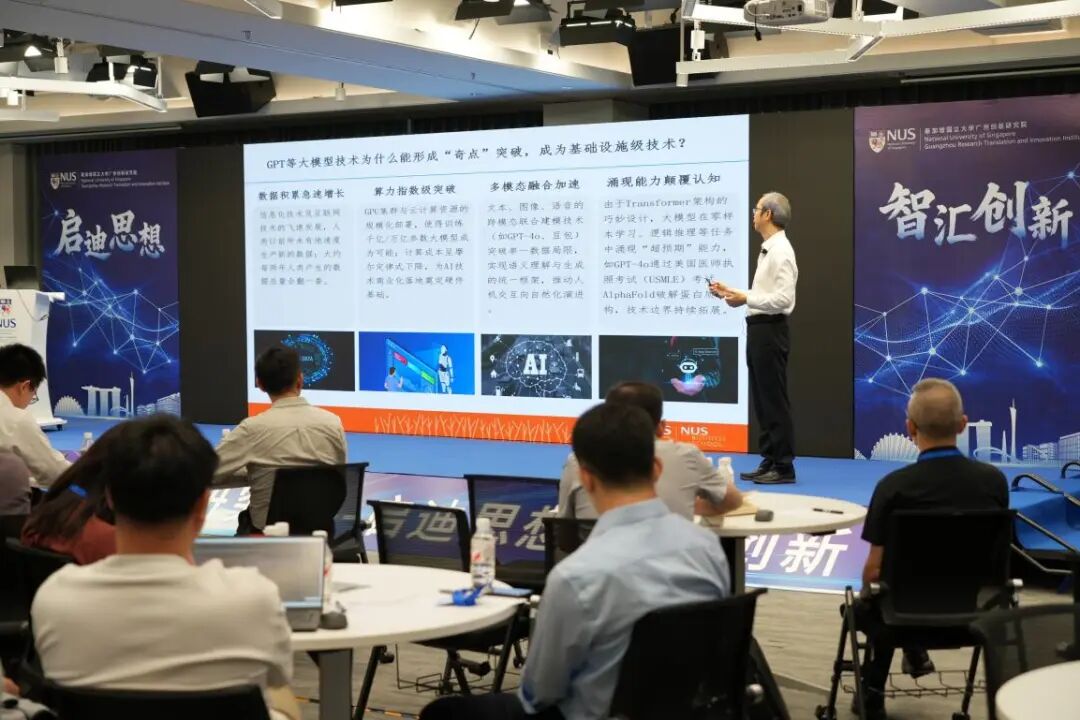
Tracing the 70-plus-year evolution of artificial intelligence, Professor Pang highlighted that the "singularity" breakthrough of large language models (exemplified by ChatGPT)—and their rise as infrastructure-level foundational technology—is driven by the confluence of four key forces:
▍Exponential Data Accumulation: Accelerated digitalization and internet expansion have enabled humanity to generate data at an unprecedented velocity and scale. | ▍Exponential Breakthroughs in Computing Power: Large-scale deployment of GPU clusters and cloud computing has driven computing costs down in accordance with Moore's Law. |
▍Accelerated Multimodal Fusion: Cross-modal joint modeling spanning text, image, and voice has driven human-computer interaction toward natural, intuitive modalities. | ▍Cognitive Paradigm Shifts via Emergent Abilities: Unprecedented capabilities such as zero-shot learning and complex logical reasoning continue to redefine technological boundaries. |
Shifting from a technological perspective to an organizational lens, the transition from traditional "rule-driven" software to "goal-driven" AI agents is redefining the productivity frontier. In the past, enterprises focused on improving efficiency through digital tools; today, they must contemplate establishing organizational capabilities that evolve synergistically with AI.
Professor Pang emphasized that the impact of AI extends far beyond technological upgrades, driving systematic adjustments across corporate strategy formulation, business processes, management models, and talent architectures.
"The competitive advantage of future enterprises will stem not merely from access to technological resources, but from an organizational system capable of continuous learning, ongoing innovation, and sustained application of AI capabilities."

Professor Yan Pang sharing insights on enterprise AI transformation pathways
02. From "Applying AI" to "Building AI Capabilities":
Elevating Organizational Intelligence
As a Professor at NUS Business School & Co-Director of the NUS Business Analytics Centre, Professor Pang has long focused on data privacy and security, trustworthy AI, blockchain, and business analytics, backed by extensive industry expertise.
Combining cutting-edge research with real-world industry cases, Professor Pang provided a concise definition of an "AI-Native Organization": An AI-native organization is not merely an entity that "uses AI," but one that fundamentally redesigns its operating model around collaborative synergy between human expertise and artificial intelligence.
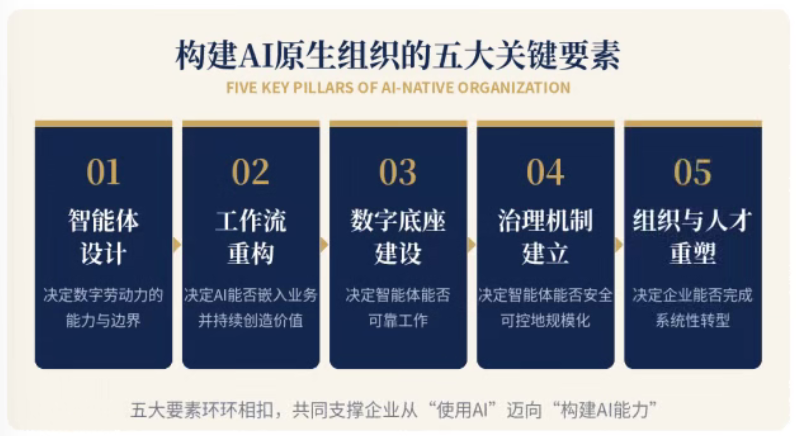
To operationalize this transition, the masterclass systematically unpacked the Five Key Pillars of AI-Native Organization—an interconnected framework guiding enterprises from superficial AI adoption to deep capability building:
At the workflow level, the course introduced three distinct operational models. The critical distinction among these models lies not in the mere presence of AI, but in the degree of autonomy and authority delegated to AI agents:
Increasing Level of AI Autonomy
HUMAN-LED, AGENT-ASSISTED — Humans initiate work and make primary judgments; AI handles information collection, analysis, drafting, and recommendations.
AGENT-LED, HUMAN-SUPERVISED — Agents receive objectives, plan, and execute independently; humans set boundaries, handle exceptions, and evaluate outputs.
AUTONOMOUS WITHIN GUARDRAILS — Humans predefine policies, permissions, and risk thresholds in advance; agents operate continuously and autonomously within these set guardrails.
Contrasting the transformation of traditional enterprises (such as Shopify) with "born-AI" companies (such as Cursor), Professor Pang noted that the essence of AI-native transformation lies not in adding AI features, but in systematically restructuring human work, agent tasks, and accountability boundaries.
The session concluded with the "Dual-Track Roadmap"—taking business value creation as the starting point and workflow re-engineering as the core, driven through iterative, dual-track implementation.
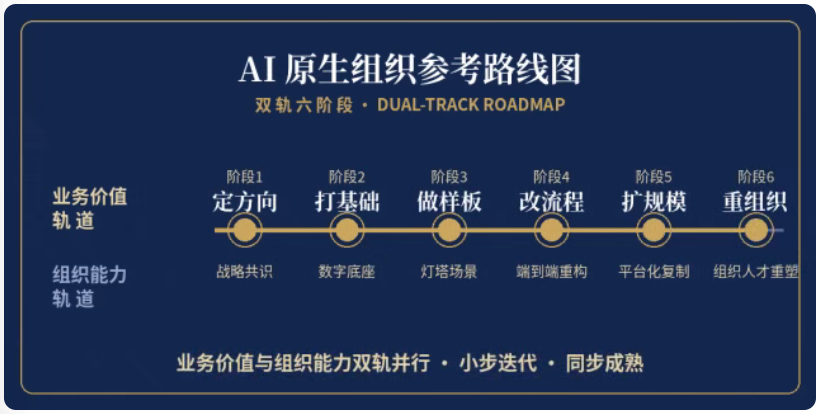
From laying foundational data infrastructure to deploying intelligent business applications, and from driving technological innovation to optimizing cross-functional alignment, enterprises must systematically re-evaluate how AI intersects with their growth. AI transformation is not a simple adoption of new tools or software; it is a long-term buildout of enterprise capability systems. True value creation occurs only when technological capabilities, business acumen, and organizational architecture are fully aligned.

From frontier trends to organizational capabilities
03. Knowledge Exchange & Practical Insights:
Building an Entrepreneurial Learning Community
During the interactive forum, participants engaged in deep discussions surrounding real-world challenges in corporate AI deployment and organizational transformation:
"Is a higher quantity of AI agents inherently better for an enterprise?"
"Which specific workflows should remain strictly human-centric?"
Addressing real management challenges in the AI era, participants drew upon their respective industry experiences to debate and synthesize actionable pathways for integrating AI with organizational development.
From classroom instruction to live interaction, corporate leaders across sectors deepened their understanding of AI trends and organizational change while expanding their industry perspectives.
Crucially, the masterclass served not only as a vessel for knowledge transfer, but also as a solid bridge connecting enterprises, experts, and innovation resources, establishing dynamic networks for future practice. Centering on shared industry challenges and topics, participants from diverse sectors progressively establish networks for dialogue and collaboration, uncovering broader possibilities for innovative practice.
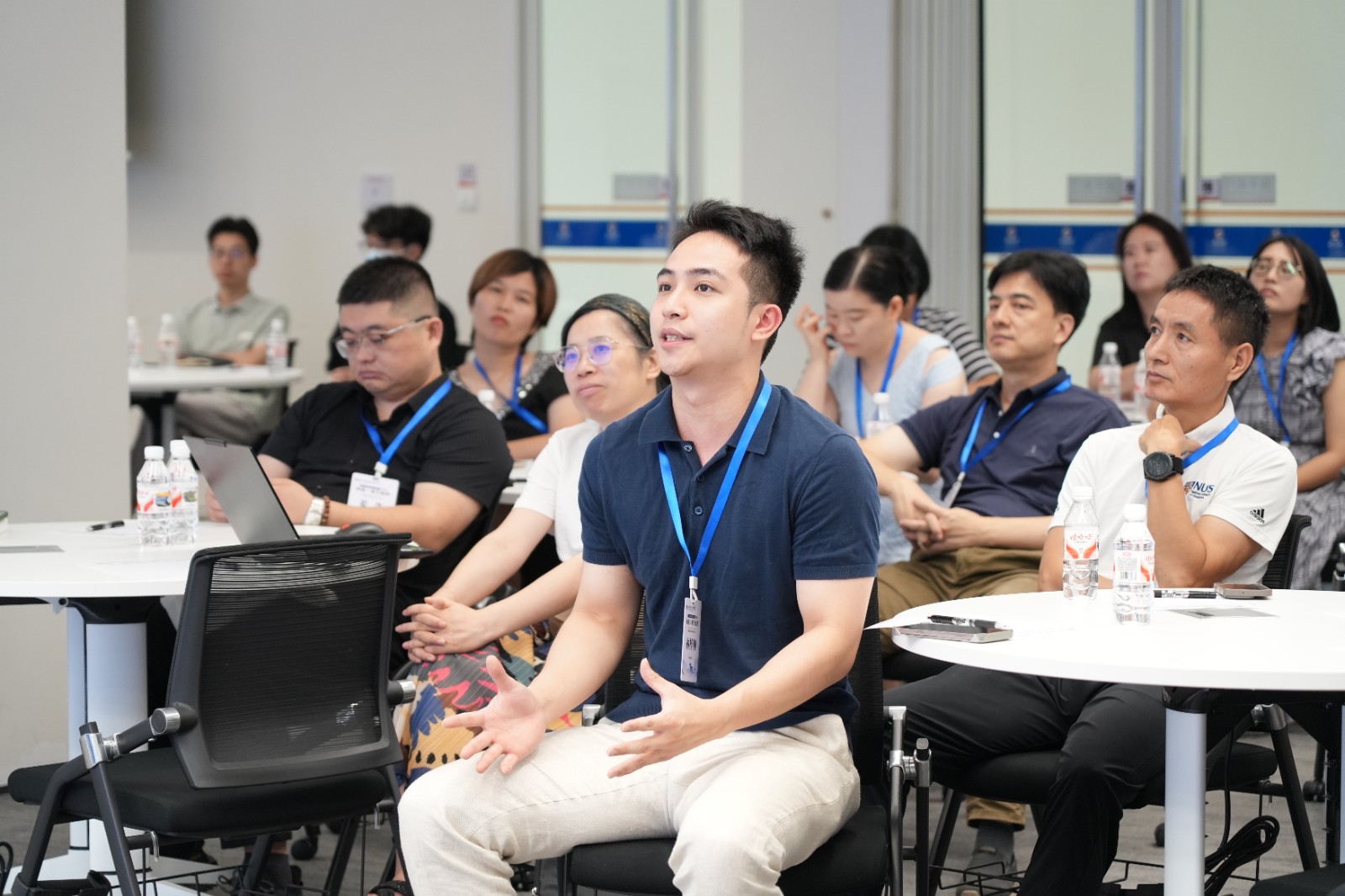
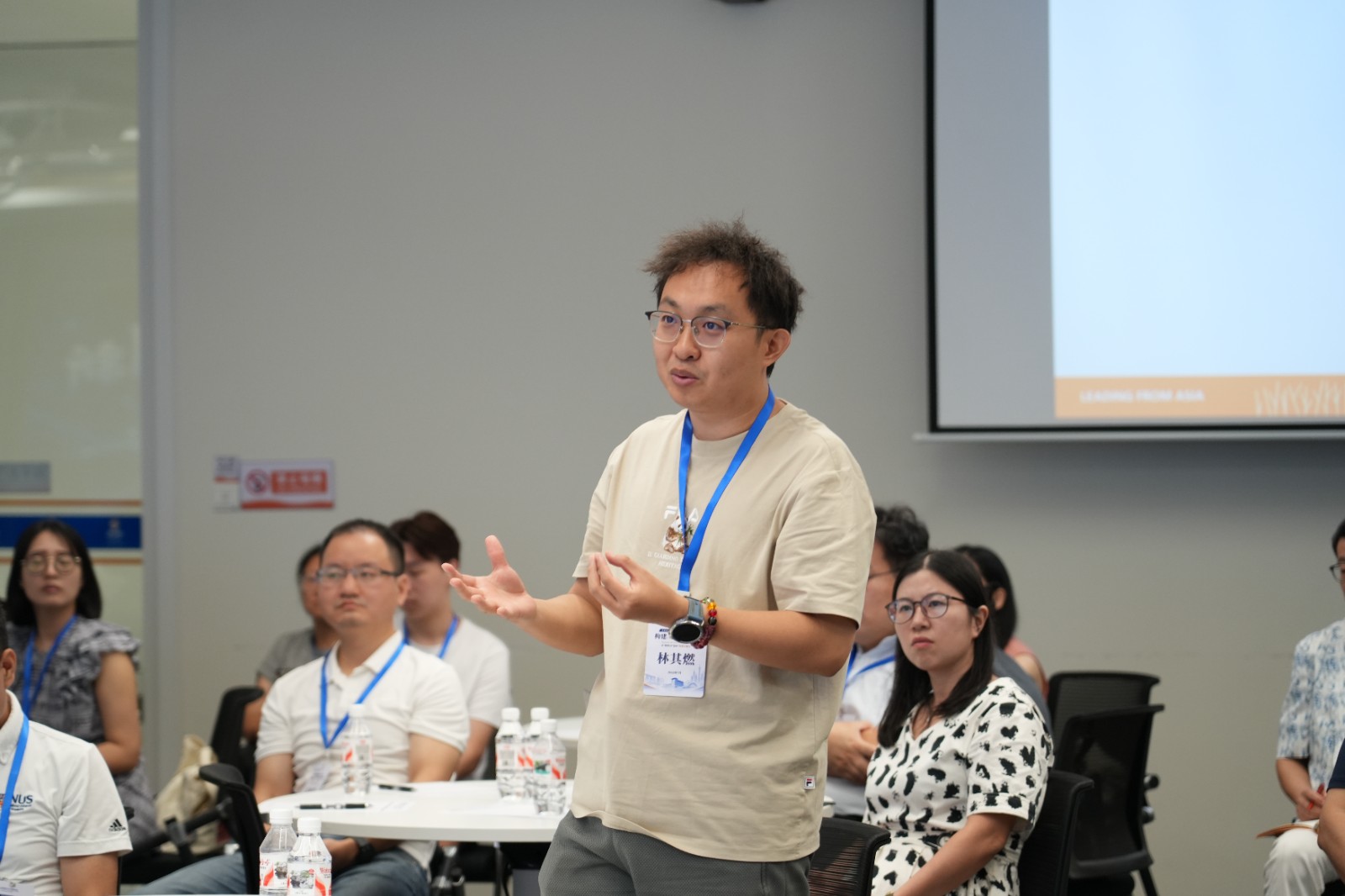
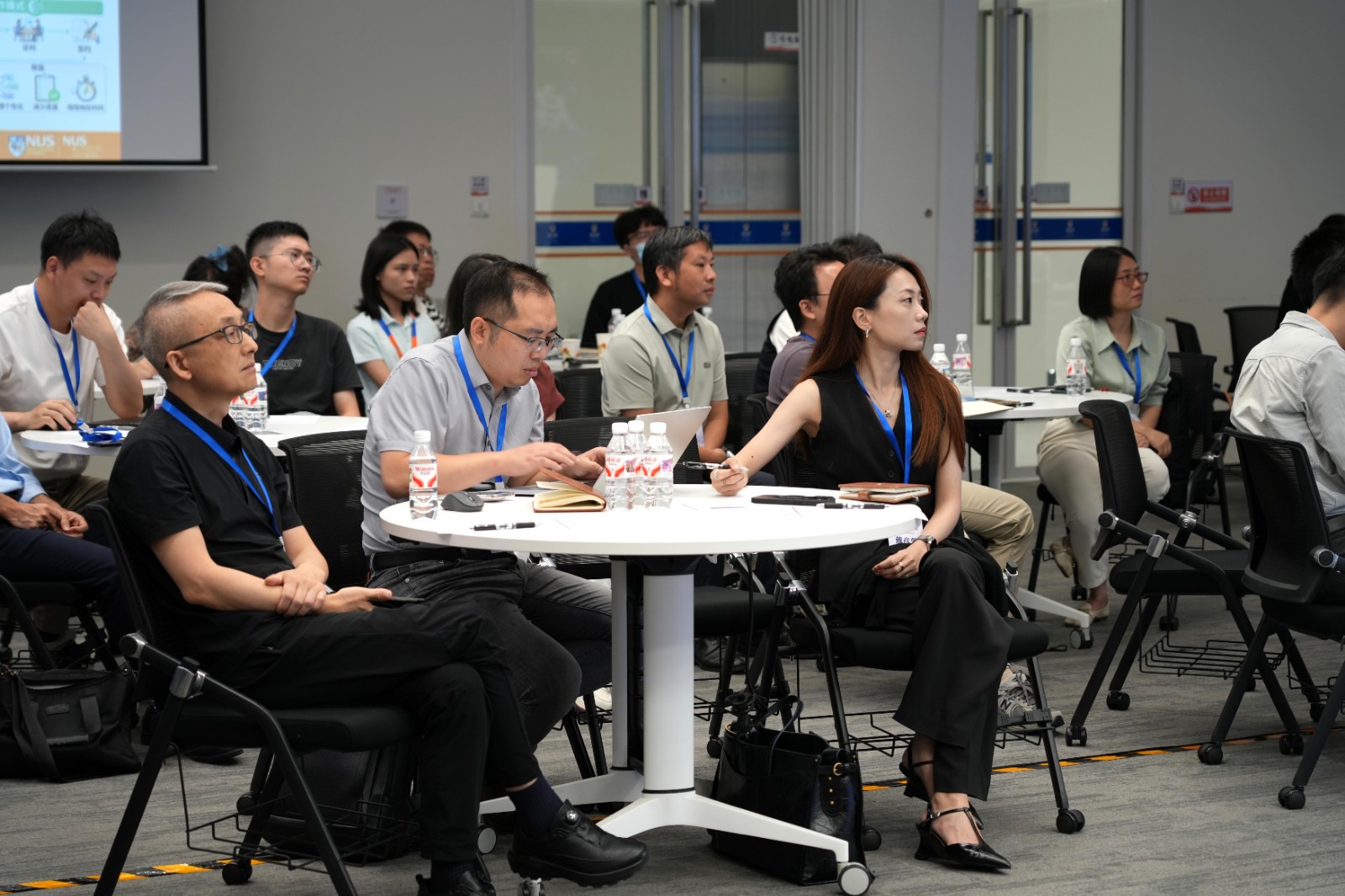
Attentive listening and on-site Q&A
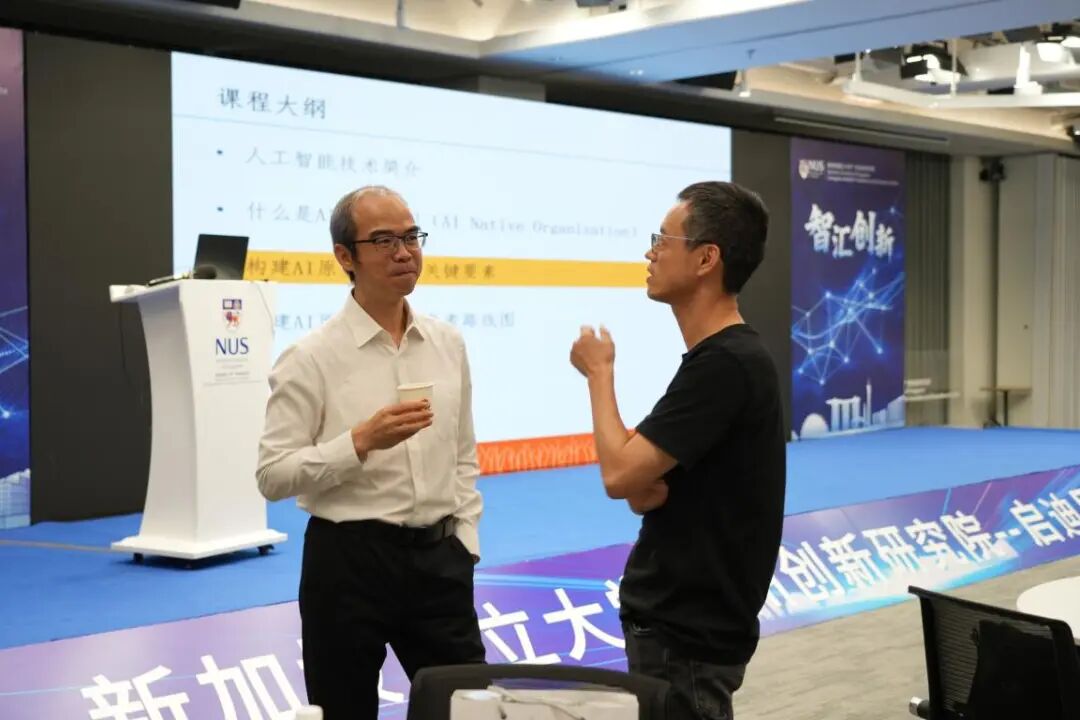
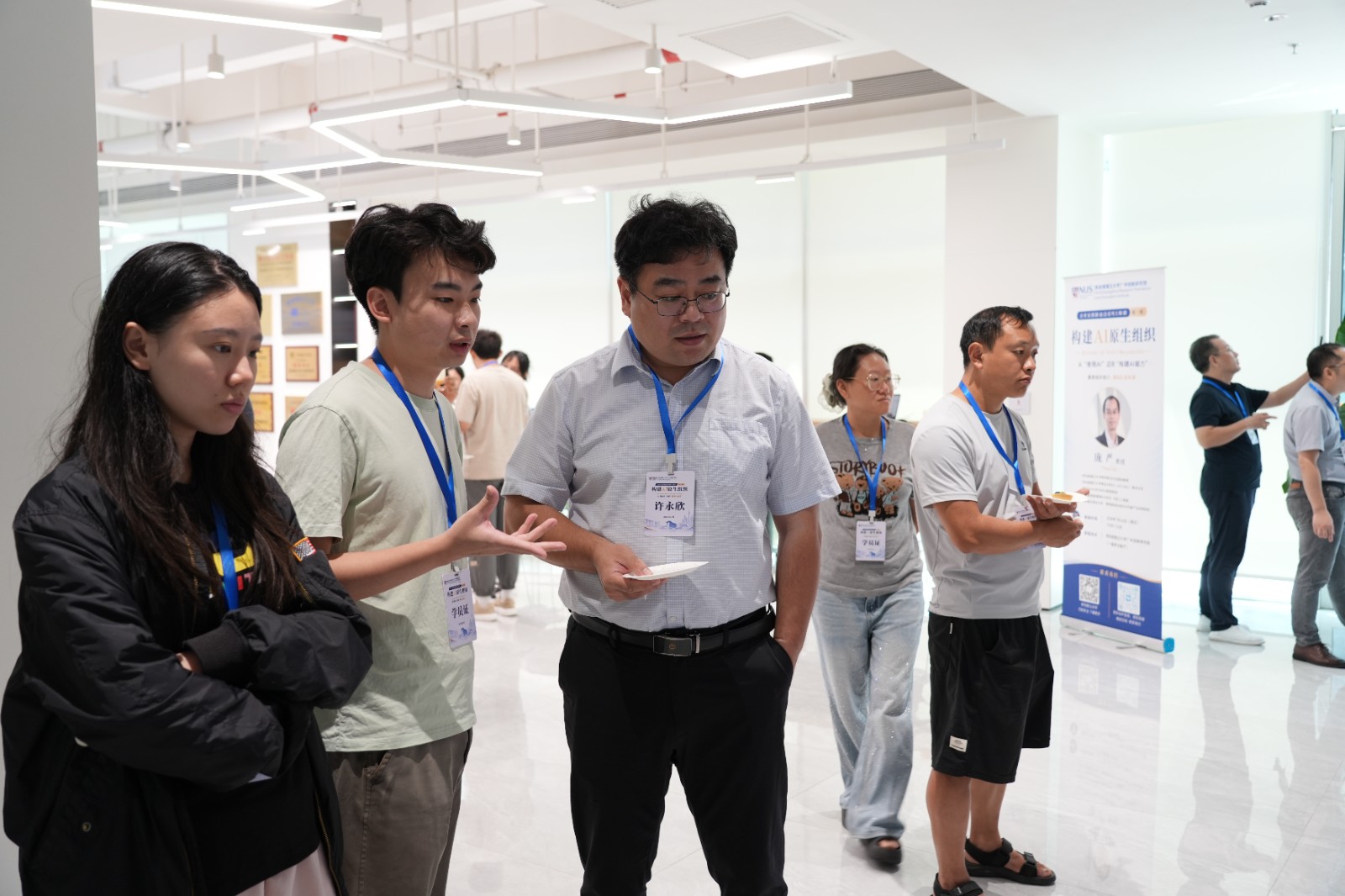
Idea exchange and post-session discussion
04. Connecting Global Wisdom:
Empowering Continuous Enterprise Innovation
The Frontier Masterclass Series on Entrepreneurial Innovation is a executive learning initiative curated by the NUS Guangzhou Research Translation and Innovation Institute (NUS GRTII) for business leaders.
Focusing on artificial intelligence, industrial innovation, and corporate development trends, the series convenes academic experts, industry practitioners, and ecosystem partners to explore transformative business strategies amidst global shifts.
Moving forward, NUS GRTII will leverage the global academic resources of the NUS and the vibrant industrial ecosystem of the Guangdong-Hong Kong-Macao Greater Bay Area to continuously build a collaborative platform bridging knowledge, industry, and innovation—empowering enterprises to broaden their global horizon and unlock new growth opportunities.

Group photo of the inaugural session
The journey continues. The second session of the Masterclass Series will commence shortly—stay tuned. We look forward to joining hands with more industry leaders to co-explore new pathways for enterprise innovation.