At the awards ceremony of the 2026 President's Science & Technology Awards (PSTA), Assistant Professor Liu Boxiang, Presidential Young Professor and Assistant Professor at the Department of Pharmacy and Pharmaceutical Sciences, Faculty of Science, National University of Singapore (NUS), and Principal Investigator (PI) at the NUS (Guangzhou) Research Translation and Innovation Institute, was presented with the 2026 Young Scientist Award.
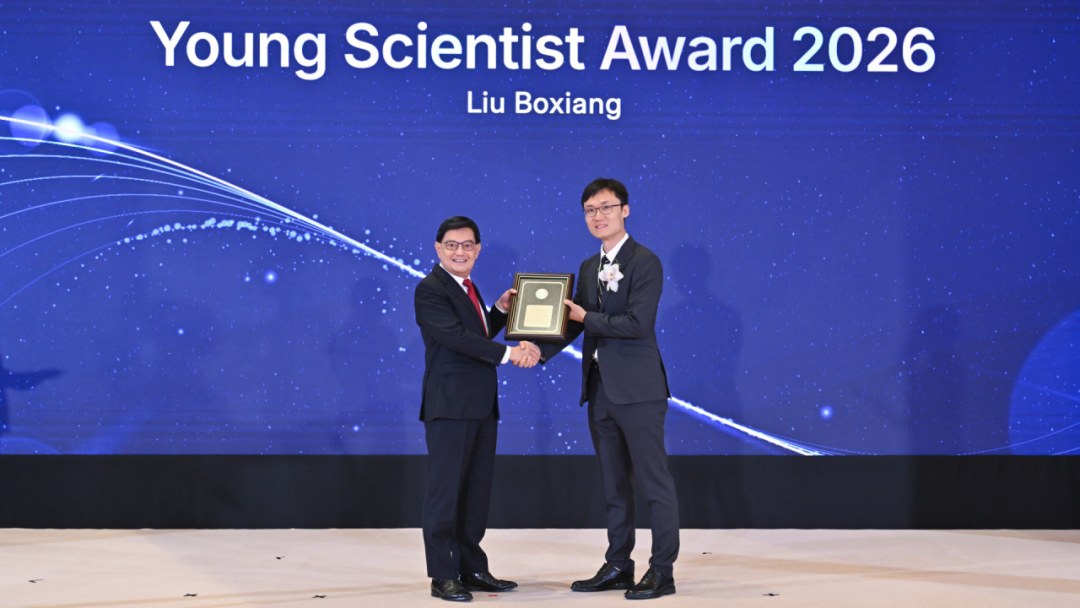
Asst Prof Liu receives the 2026 President's Science and Technology Young Scientist Award.
Organised and presented annually by the National Research Foundation (NRF), the Young Scientist Award is awarded to researchers aged 40 or under who are actively engaged in R&D in Singapore and who have shown great potential to be world-class researchers in their fields of expertise. It is one of Singapore's highest honours for scientists and engineers. This year's ceremony was held at Nanyang Technological University, where the award was presented by NRF Chairman Mr Heng Swee Keat.
Using AI to decode disease-causing genes in Asian populations
Enabling precision medicine
Assistant Professor Liu Boxiang, a computational biologist and geneticist, has long been committed to developing artificial intelligence (AI) and bioinformatics methods that improve the identification of the "culprit" genes that cause complex human diseases, with a particular focus on Asian populations, which have been underrepresented in genomic research. His work lays the groundwork for precision medicine tailored to an individual's genetic makeup.
Common conditions such as diabetes, autoimmune disorders and neurological conditions are in fact driven by hundreds, even thousands, of small genetic differences acting together. Most of these differences lie not in the genes themselves, but in the non-coding regions that regulate the gene "switches". Mapping these signals to specific disease-causing genes is one of the most fundamental challenges in modern genetics. What makes it more intractable is that the analytical tools and reference databases underpinning the field have largely been built on populations of European ancestry. Applied to Asian populations, which are highly genetically diverse, the results are often incomplete, and may even be misleading.
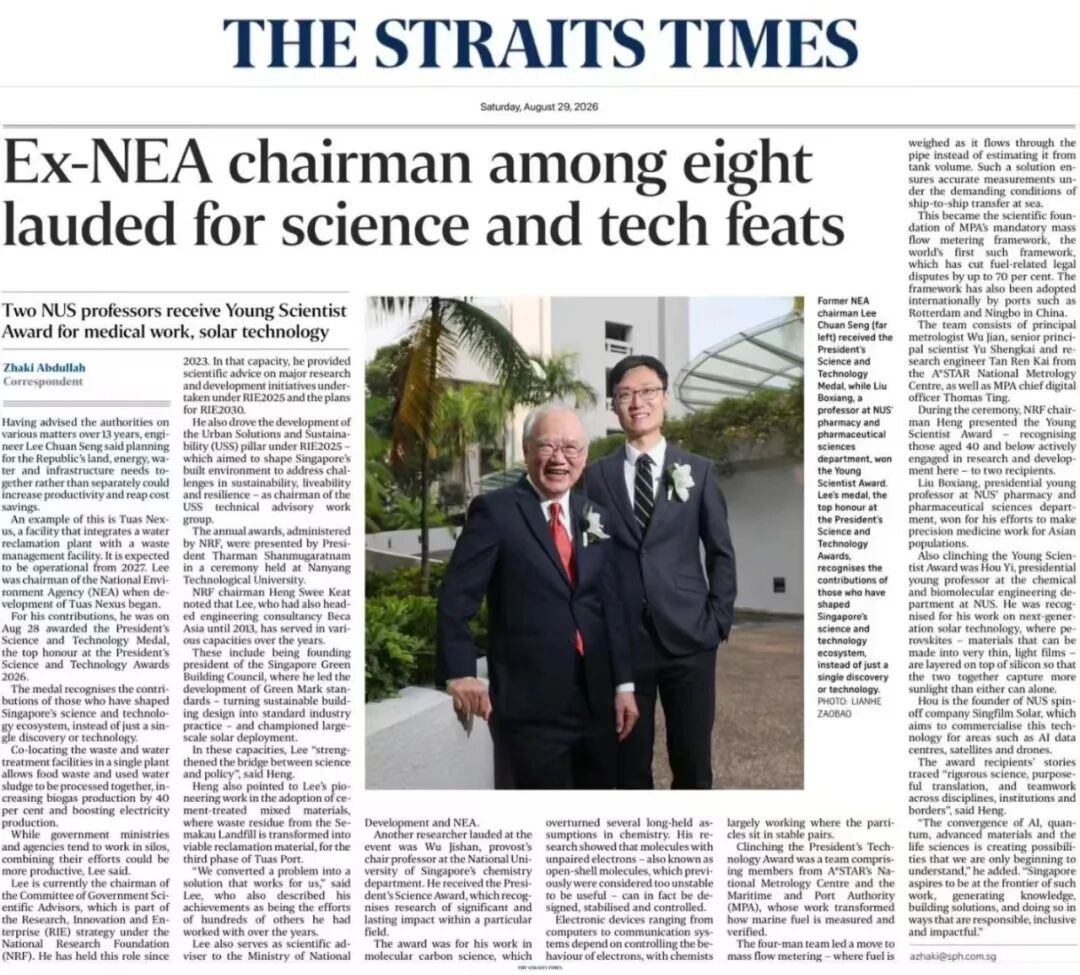
A related report on Asst Prof Liu Boxiang by The Straits Times
Building atlases and tools
Turning genetic signals into drug targets
Because genomic research has long been dominated by populations of European ancestry, genetic data on Asian populations is severely lacking. To close this gap, Asst Prof Liu has pushed forward on three fronts at once: new data resources, new computational methods, and new research tools.
He spearheaded single-cell splicing QTL analysis and built the first atlas that maps how genetic variation affects RNA splicing in individual cell types. The atlas was built on single-cell data from about one million blood cells from 474 donors across East Asia, Southeast Asia and South Asia, and the work earned a coveted spot on the cover of Nature Genetics.
In addition, Asst Prof Liu identified an Asian-specific gene variant and revealed its impact on susceptibility to Graves' disease, a common autoimmune thyroid disorder. He subsequently extended this approach to skeletal muscle and metabolic diseases, and applied it to nearly three million brain cell nuclei to identify genes associated with neurological diseases.
To make these findings credible and easy to use, Asst Prof Liu developed LocusCompare2, a web platform now used by more than a thousand researchers worldwide, which benchmarks and integrates the leading methods for linking genetic signals to causal genes. He also created DIRAC, a deep-learning model that integrates spatial and multi-omics data at the scale of millions of cells, with the results published in Nature Methods. Together, these tools turn raw genetic signals into actionable insights about disease mechanisms and potential drug targets.
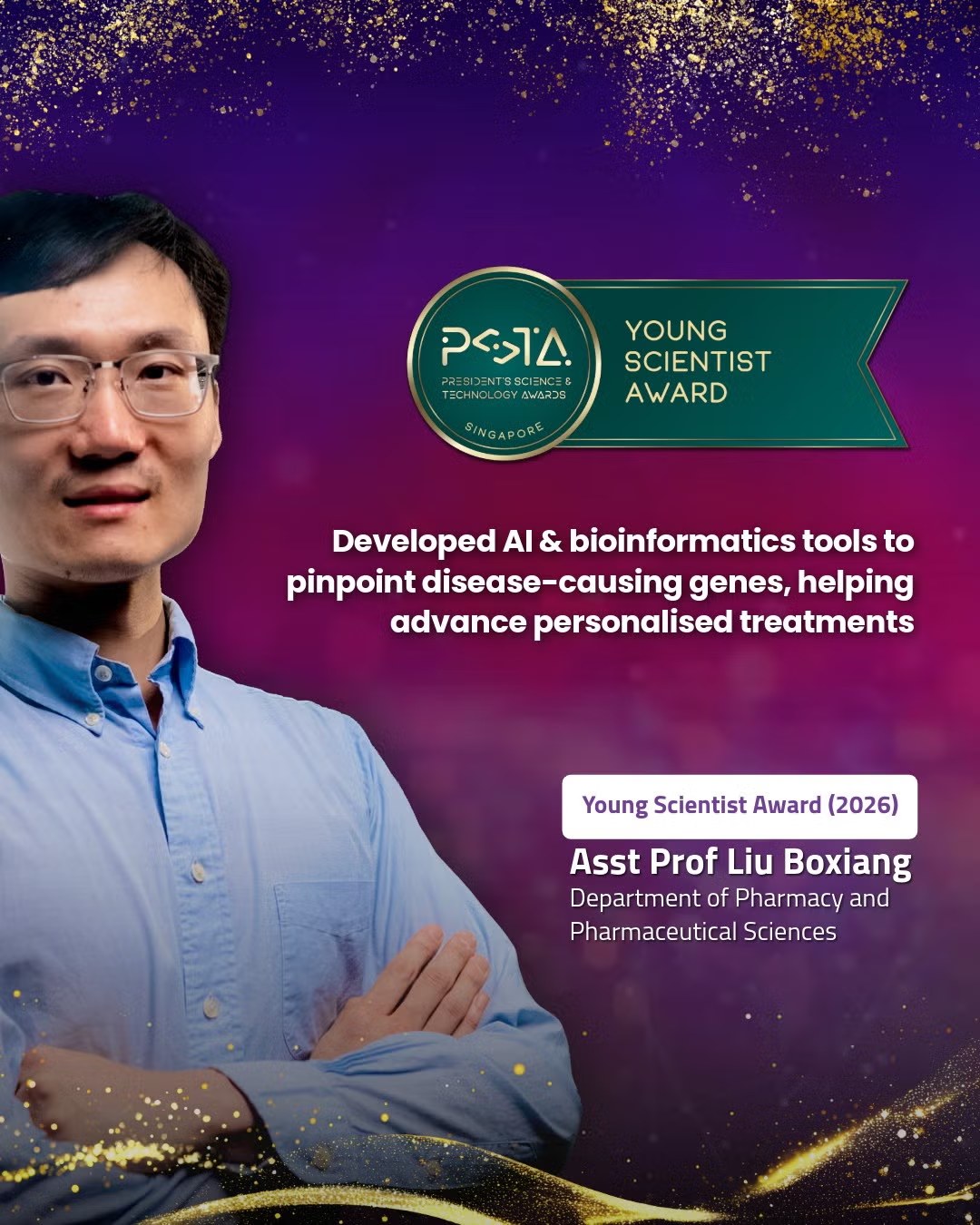
The congratulatory announcement on Asst Prof Liu Boxiang's receipt of the 2026 President's Science and Technology Young Scientist Award
On the strength of his solid body of research, Asst Prof Liu's work has been cited more than 14,000 times. Apart from the President's Science and Technology Young Scientist Award, he has also received, in the same year, the NUS Young Researcher Award and the NUS Faculty of Science Young Scientist Award. As a Presidential Young Professor at NUS, he has been invited to give keynote and invited talks at academic conferences around the world.
"Research is never a solo endeavour. I thank every member of my team for their tireless efforts day and night, as well as my seniors, mentors and collaborators for their guidance and support over the years."
— Liu Boxiang
A steadfast commitment to education
Bringing genome science into the classroom and industry
Beyond his research breakthroughs, Asst Prof Liu has remained committed to nurturing the next generation of scientific talent. He directs the Genomic Data Science Laboratory and the MGI-PPS Joint Laboratory at NUS, mentoring a team of PhD students and postdoctoral fellows whose work has won awards at the University level and beyond. He has co-created and taught multiple undergraduate and graduate courses, weaving genomics, biostatistics and AI into the Pharmacy and biomedical curricula. He also leads an industry partnership to bring advanced sequencing capabilities to NUS.
"Research is never a solo endeavour," shared Asst Prof Liu. "Our team has always been focused on using AI and bioinformatics tools to unlock the code of disease-causing genes in Asian populations. Winning the award is a brand-new starting point. Right now, I am working with my students to advance the translation of our research. Going forward, I will continue to balance teaching, research and research translation, committed to turning frontier advances in computational biology into precision medicine solutions that can truly change patients' lives."
Sources
https://news.nus.edu.sg/three-nus-trailblazers-honoured-with-nations-top-research-accolades/
https://www.science.nus.edu.sg/blog/2026/08/presidents-science-and-technology-awards-2026-recipients/
https://news.nus.edu.sg/nus-university-awards-2026-a-tribute-to-excellence-in-education-research-mentorship-and-service/