Recently, the Asian Young Scientist Fellowship (AYSF) announced its 2026 cohort of Fellows. Assistant Professor Mike Zheng Shou, from the Department of Electrical and Computer Engineering at the College of Design and Engineering and the Department of Computer Science at the School of Computing, National University of Singapore (NUS), and Principal Investigator (PI) at the National University of Singapore Guangzhou Research Translation and Innovation Institute (NUS GRTII), has been selected as a 2026 AYS Fellow. He is one of 12 Fellows worldwide this year.
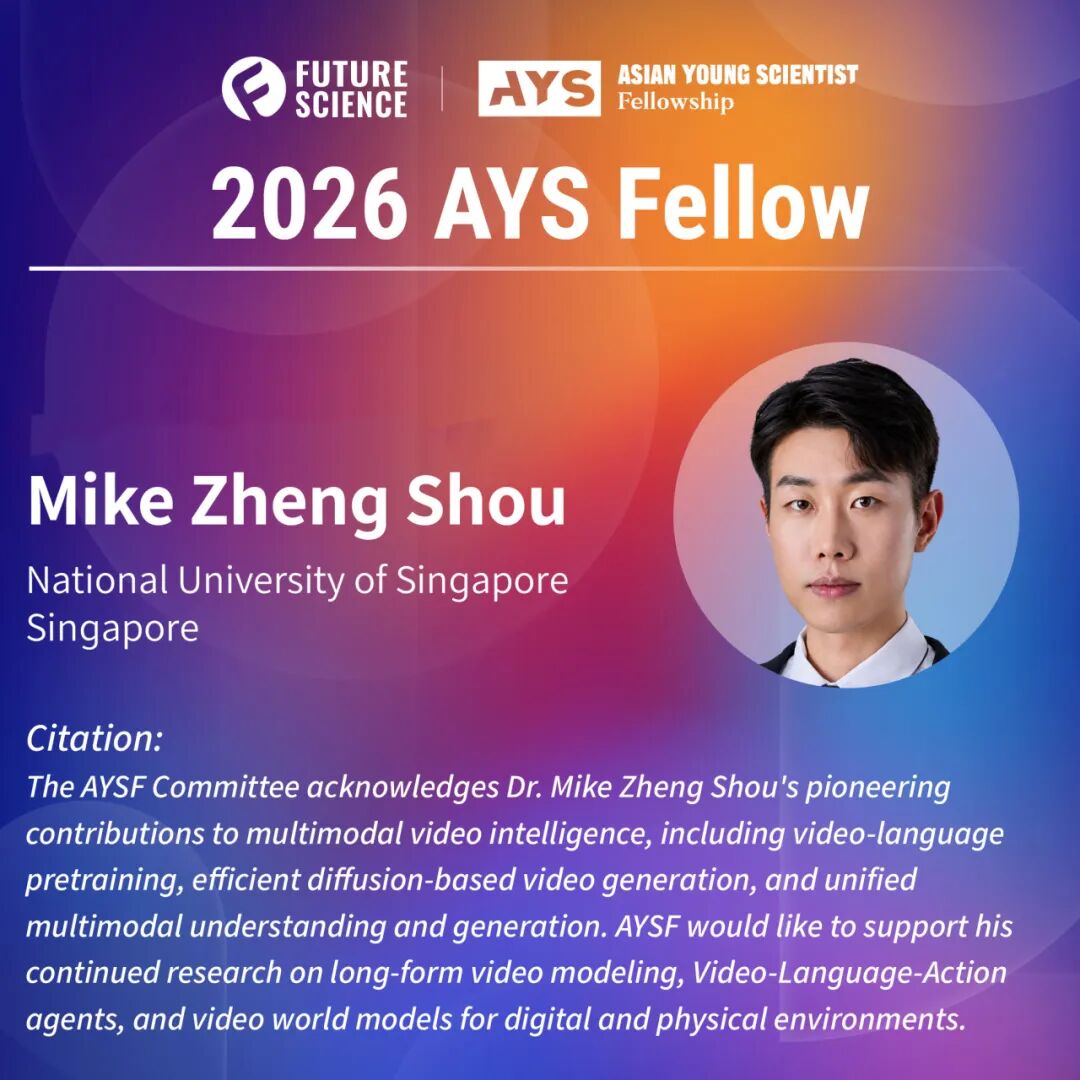
The AYSF annually selects early-career scientists who have made outstanding contributions and demonstrated exceptional potential in basic science fields: life sciences, physical sciences, and mathematics and computer science. A total of 12 researchers across the globe were selected for the 2026 program. The fellowship provides USD 100,000 in unrestricted research funding over two years to early-career scholars within 10 years of earning their doctoral degrees. It also builds an academic network and an annual conference platform connecting young scientists across Asia and the world, and is recognized as one of the most prestigious honors for early-career scientists in Asia.
Advancing Multimodal Video Intelligence:
Enabling Machines to Both “Understand” and “Generate” Videos
Assistant Professor Shou’s research is dedicated to multimodal video intelligence, aiming to enhance AI’s capabilities in video understanding and generation, and to advance video intelligence from passive analysis to real-world applications with greater practical value. Since joining NUS in 2021, he has established a leading research programme in multimodal video intelligence, with findings applicable to a wide range of scenarios including elderly care robots, intelligent security systems, AI-assisted video creation, the metaverse, and smart glasses.
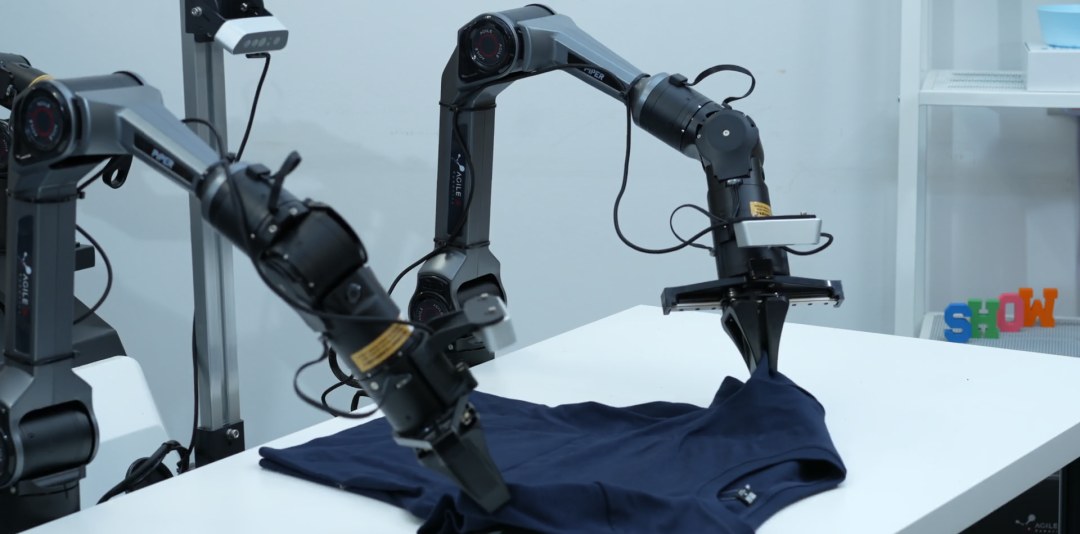
Leading the Show Lab research team, he focuses on egocentric video — the real-world visual perspective perceived by smart glasses and home robots — as the basis for model development. The team has launched multiple pioneering open-source video diffusion models, released nine open-source software packages widely adopted by the industry, and accumulated over 280,000 total downloads of its related models.
Three Core Research Achievements:
From Egocentric Vision to Unified Modeling
Assistant Professor Shou’s research outputs in multimodal video intelligence form a clear, cohesive technological trajectory.
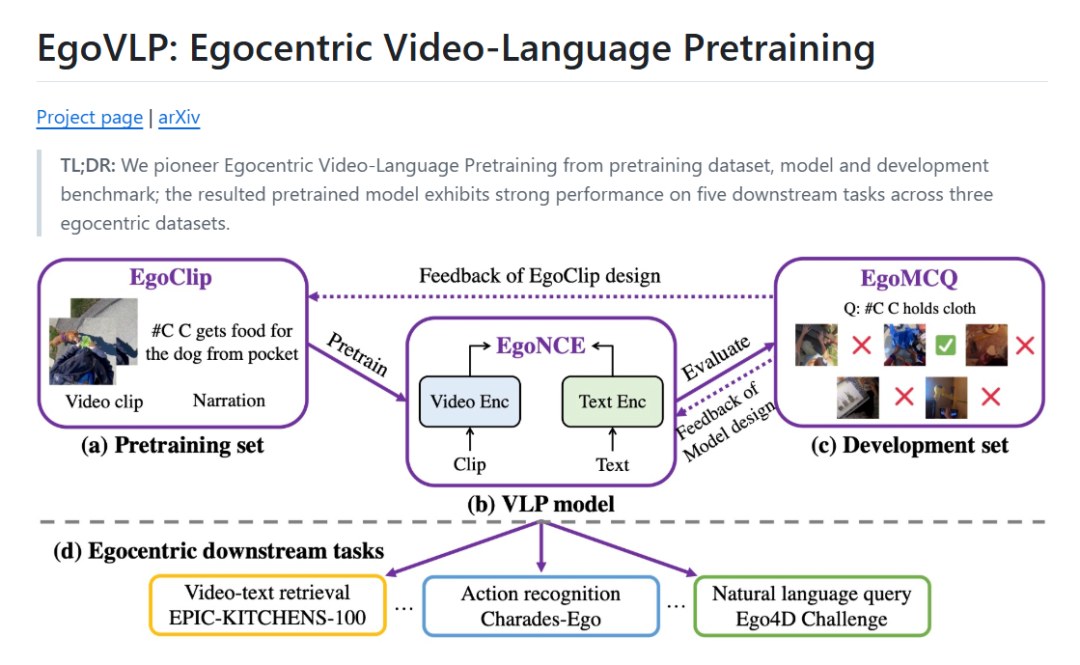
In video understanding, his leading EgoVLP work introduced the world’s first egocentric video-language pre-trained foundation model. Prior models were mostly trained on third-party online videos, yet care robots and smart glasses precisely require first-person visual understanding — a critical gap that EgoVLP has filled.
In video generation, the Show-1 model is among the earliest open-source video diffusion foundation models, drastically reducing required GPU memory from 72GB to 15GB. Tune-A-Video pioneered the novel “one-shot training” paradigm, which rapidly adapts pre-trained image diffusion models to video generation, cutting training time from several weeks to approximately 10 minutes on a single GPU.
In unified modeling of understanding and generation, Show-o is a compact AI model capable of simultaneously understanding images, generating visuals, and integrating language within a single framework. It outperforms separate systems ten times its size, and boosts the generation speed of autoregressive models by 20 times.
From Research Papers to Real-World Impact:
Turning Video AI into “Active Agents”
Assistant Professor Shou’s research extends beyond academic publications and benchmark testing, with a strong focus on translational potential and real-world impact. In 2025, he received the inaugural Provost’s Innovation Chair Professor Award for his project AI-powered Video Intelligence and Automation. He was also presented with the Innovation Venture Creation Award in recognition of his innovation, translational potential, and real-world impact in the field of multimodal video AI.
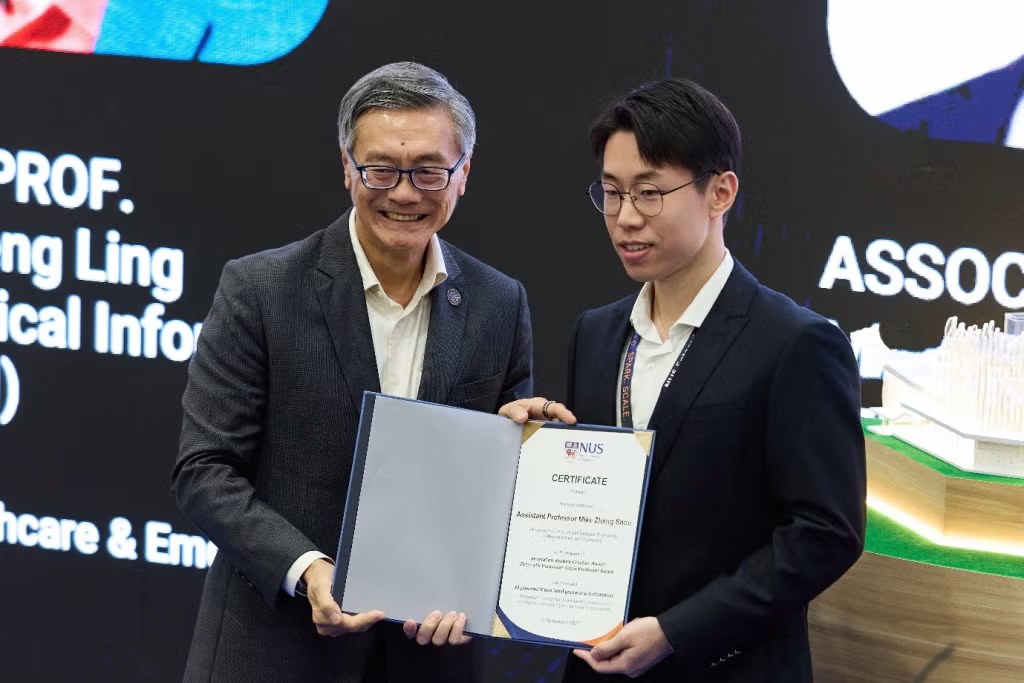
His selection for the AYSF will further propel his research into a new phase. With the fellowship funding, Assistant Professor Shou plans to focus on key research challenges in Video-Language-Action Agents and Video World Models.
“I am honored to be selected for the 2026 Asian Young Scientist Fellowship. This is recognition of our video AI research, and this achievement would not have been possible without the efforts of my students and collaborators, as well as the strong support from NUS,” said Assistant Professor Shou. “With the fellowship funding, I hope to advance research on Video-Language-Action Agents and Video World Models, and drive the evolution of video AI from a ‘passive observer’ to an ‘active agent’ — for example, digital agents that operate computers on behalf of humans, and robotic agents that serve healthcare and scientific discovery.”
From Industry to Academia:
Broadening the Horizon of Video AI
Before joining academia, Assistant Professor Shou worked as a Research Scientist at Facebook AI. He joined NUS in 2021 and was awarded the Presidential Young Professorship and the National Research Foundation (NRF) Fellowship in the same year. Moving from cutting-edge industrial research to systematic education and talent development at the university, he has gradually expanded the scope of video AI research.
As one of the 12 2026 AYS Fellows, Assistant Professor Shou will present his research findings at the AYSF Annual Conference to be held in Hong Kong this November.
NUS GRTII extends its warmest congratulations to Assistant Professor Mike Zheng Shou on his selection for the 2026 Asian Young Scientist Fellowship. From enabling machines to “understand” the egocentric world, to transforming video AI into proactive “agents” that take initiative, his work demonstrates how closely multimodal intelligence can integrate with everyday life. We look forward to him building on this prestigious honor and continuing to deliver solid, remarkable advances at the frontier of video AI research.
Sources
https://cde.nus.edu.sg/news/mike-zheng-shou-named-asian-young-scientist-fellow-2026/
https://www.comp.nus.edu.sg/news/assistant-professor-mike-shou-named-2026-asian-young-scientist-fellow/